Shakespeare’s marriage - what do we know and what part did Worcester play?
When we think of William Shakespeare, we naturally link him with his home in Stratford-Upon-Avon, or perhaps the Globe Theatre in London – both locations where the Bard’s plays are still performed today and are known throughout the world.
But how about Worcester? Did you know that the world-famous playwright also has connections to the City and may have got married there? Could he have stopped at the Cardinal’s Hat Inn, passed the Cathedral or walked on the cobbles of Friar Street? Mystery certainly surrounds his possible presence in the City.
Professor Nicoleta Cinpoes, Professor of Shakespeare Studies, explores the possible connections Worcester has to Shakespeare.
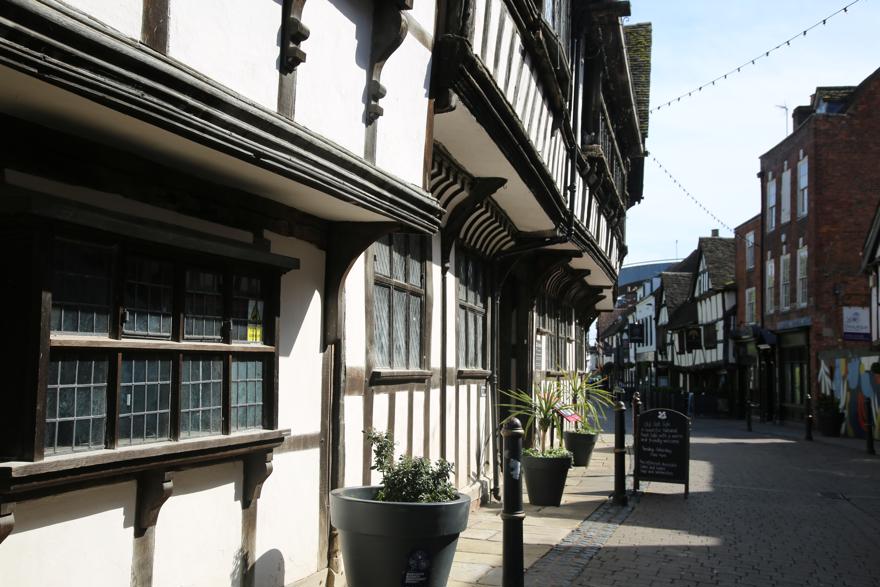 Friar Street in Worcester
The questions around Shakespeare’s connections to Worcester are ones that have puzzled Shakespeare experts and enthusiasts alike, with some tangible clues existing - and others lost to time.
Solid evidence of the link to Worcester exists in the archives of The Hive library, with Worcestershire Archives & Archaeology Service – Shakespeare’s marriage bond.
With very little contemporary documentary evidence of this kind surviving on Shakespeare’s life, the University of Worcester’s Professor of Shakespeare Studies, Nicoleta Cinpoeş, says it is a significant artefact.
“It is very important since, as far as we know, he only married once and this is one of only two documents relating to his marriage that we have,” she said. “A lot of information that comes to us from that period is from plays and publications, but also from legal documents so it's quite interesting to think about that. The vast majority of transactions that are happening at the time get recorded legally. All sorts of other things we can only speculate about, but those exist. Some of the plays that were written at the time and pieces that never made it beyond manuscript are lost forever, but litigations, there are miles of documents about that.”
Such is its importance, that the marriage bond, which is part of the archives of the Diocese of Worcester, is recognised by UNESCO and was added to the International Memory of the World Register.
Dated November 28, 1582, the marriage bond, was part of a process to seek a dispensation from the Bishop of Worcester for William Shakespeare and future wife Anne Hathaway’s marriage. It is one of only two documents recording this marriage and might have been produced to secure the marriage license, which is now lost. The dispensation allowed the marriage to take place more quickly.
The marriage also appears in the Bishop of Worcester’s register, but there is confusion created here as this records that a license was granted to William Shakespeare for his marriage to ‘Anne Whateley of Temple Grafton’. It is not known exactly why the license was needed or why Shakespeare does not appear to have married in his home parish, but it means that Shakespeare may have had to come to Worcester to obtain it.
It is also speculated that Shakespeare married in the City, though no records have been found to confirm where. St Martin’s Church in the Cornmarket has historically been thought the likely candidate, and a statue outside it lays claim to that, though the exact the page with the date on which Shakespeare got married appears to have been cut out from the church’s records for that period.
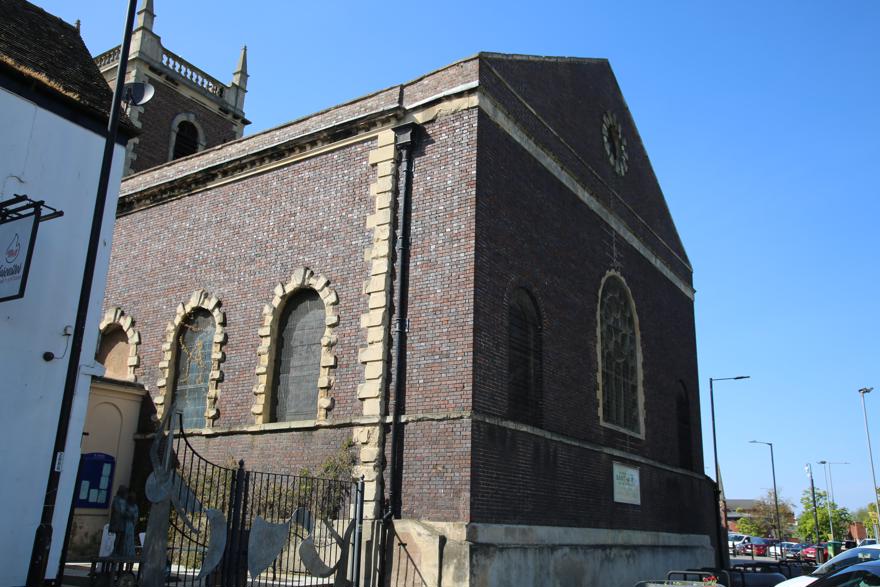 St Martin's Church
For Professor Cinpoeş, all this speculation is very interesting. “There are gaps in Shakespeare's biography that people have tried to account for by means of conjecture simply because we do not have the facts,” she said. “We have the marriage bond, but we do not have the record in any church register of the marriage as it happened, and we do have the confusion over the names.
“There's a lot of speculation around the conditions in which the bond was drawn - the legal implications, and the understanding of marriage and the marriage union at the time, which was very different. Mystery surrounds it and the unusual part of the marriage bond is the fact that both people to be married were not local, so they were likely not married in their parish.”
She added: “When we talk about Shakespeare, it's difficult to divorce the person from the works and the works from the person. I am interested in how biographies of Shakespeare negotiate the person and how much they have to rely on his works. And how the big gaps and the absences of evidence and clearly documented whereabouts leave a lot of room for people's completely different takes on Shakespeare as a person, and sometimes Shakespeare's wife as a person.”
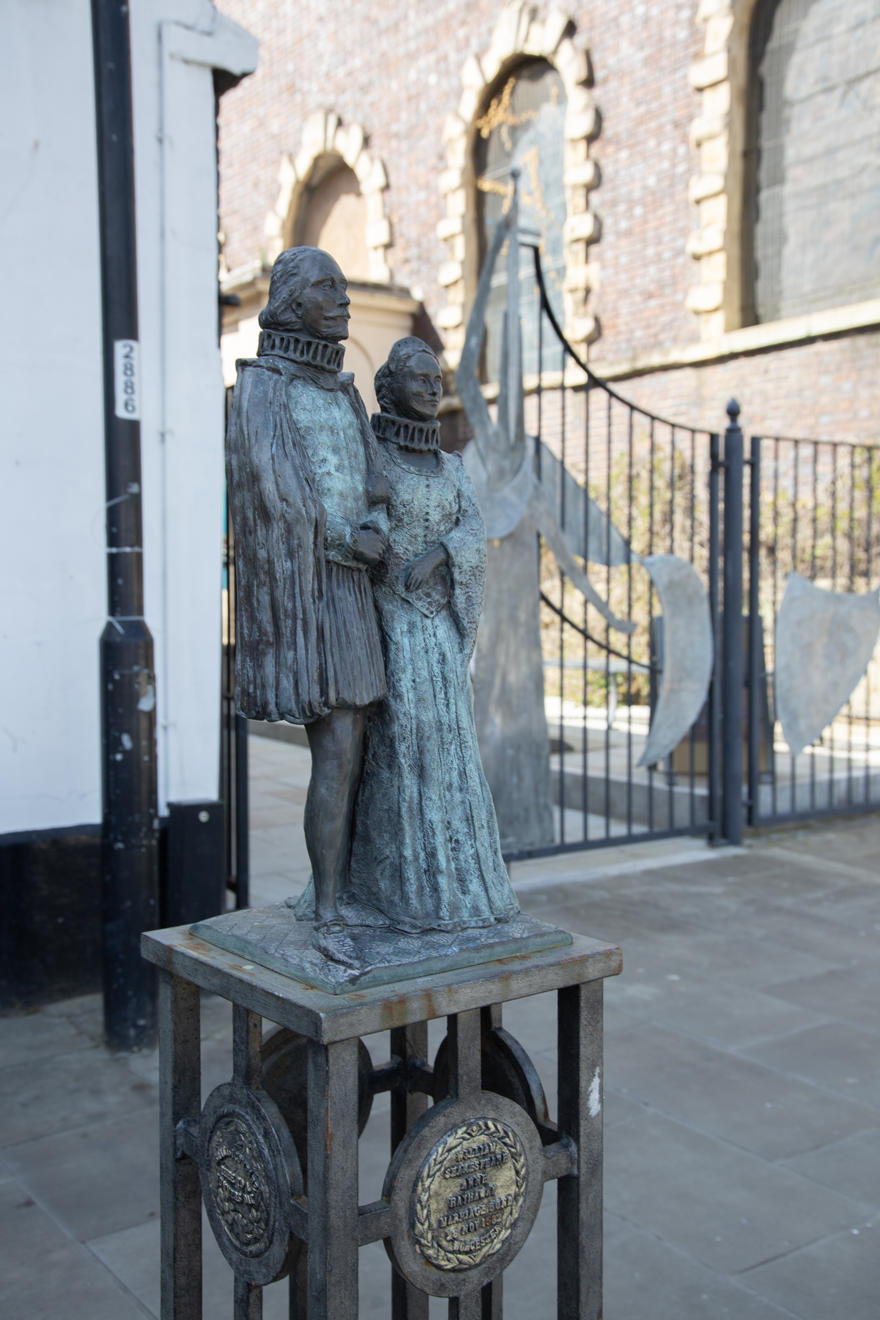 Statue of Shakespeare outside St. Martin's Church
Professor Cinpoeş said there have been an “overwhelming” number of Shakespeare biopics and that this is not just an English-speaking countries’ preoccupation, reflecting the playwright’s international celebrity. She said there is also a very strong interest in fiction writing and stage writing on Shakespeare the man.
She said: “It's very attractive on the one hand because of the things that we know about him, but also because of the things that we don't know, the incompleteness of that biography that allows the creative, the interpretative, the speculative.”
With little in the way of contemporary documentation then, what can we learn from Shakespeare’s own plays about how he views marriage? In Professor Cinpoeş’ opinion, this is limited as she points out that Shakespeare is writing to entertain his audience, so it is difficult to therefore draw any conclusions as to what he thought or about his own relationship.
Professor Cinpoeş sees the plays as Shakespeare drawing on the society around him to raise questions about the marriage practice. “He’s just putting it out up there on a stage and that makes for public exploration and debate about it,” she said.
“I'm interested in how much marriage and the complex stages of completing the marriage union is depicted in Shakespeare's works and how he speaks about that. Some of the situations work out well, others are meant to look farcical and funny, others very tragic. And there's a lot of legislation, a lot of sending up that kind of practice, especially when the parents are involved.
She added: “There are lots of manuals at that time that educate what makes a good husband, what makes a good wife. And I think there's a lot of that in Shakespeare's plays that show you younger characters who send up all the conventions and expectations up to the point of marriage. Once that happens though, all those kind of liberties and transgressions are withdrawn from them. The ultimate goal of a comedy is to get people married, that's the convention. But how you get there? That's what
makes it interesting and that's what allows the range of views on marriage that Shakespeare puts out there for people to look at.”
Whatever the truth about Shakespeare’s own marriage, and his views on the practice, its circumstances and connection to Worcester only add another layer of mystery to the playwright’s appeal and the endless academic speculation and artistic interpretation for years to come.
Find out more about our Institute of Arts and Humanities