Camilla Argyle
The impact of professional learning was immediate for Camilla Argyle; before completing the NPQ SENCO, she had already secured the new role it was designed to prepare her for.
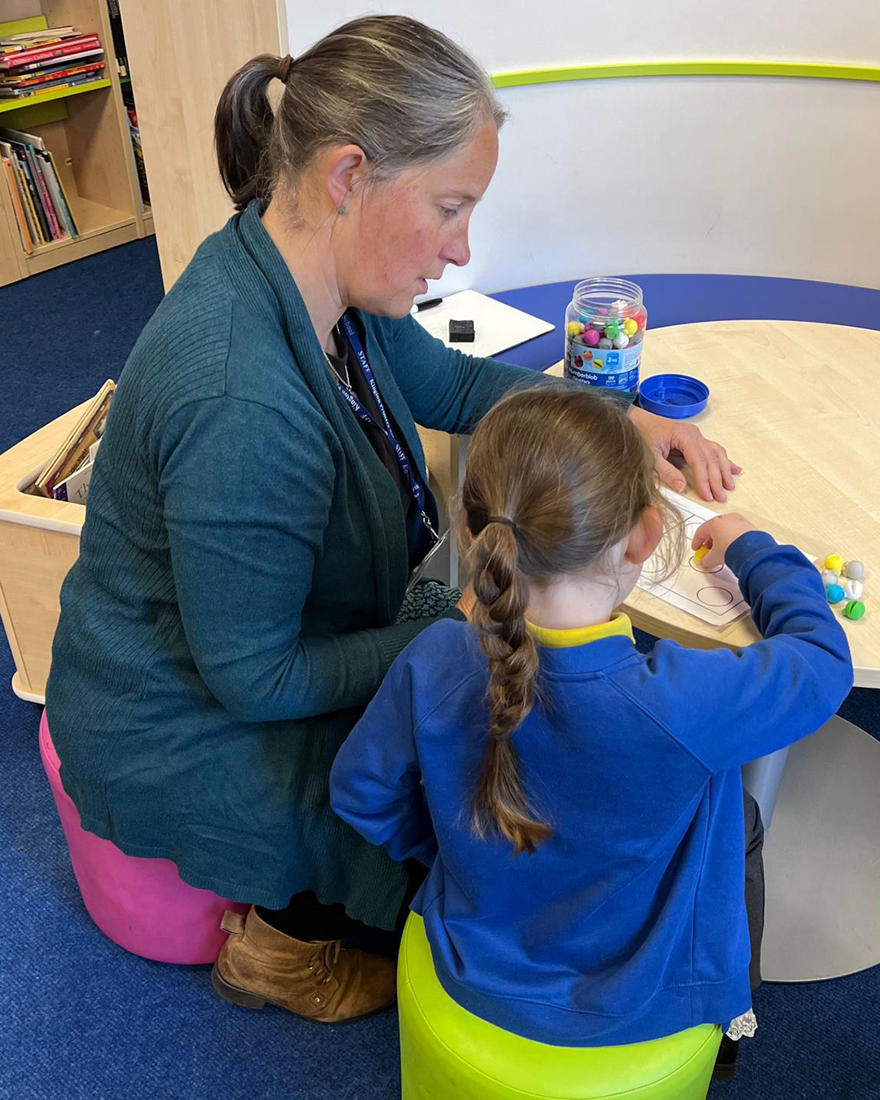
After more than a fifteen years as a teacher, Camilla had been thriving in a Reception class in Herefordshire but was beginning to think more long-term about her career.
“I really missed the academic challenge,” she said. “I love working in Reception, but I didn’t feel that I wanted to stay in that role forever, I wanted something that would open up new options for me.”
Camilla had developed a strong professional and personal interest in supporting SEND pupils. Like many experienced teachers, however, she had concerns about returning to formal study after several years, particularly around workload, academic writing and balancing professional learning with family life.
She first became aware of the NPQ SENCO through an advert highlighting available funding. “I didn’t start the course with a job to go into,” she said. “I just felt like it would give me more options and more confidence.”
Shortly after beginning the programme, a role opened at her school as a SENCO.
“As a direct result of going on this course, I’m now SENCO for the school,” she said. “I’ve been getting a handover from my colleague leaving the role, so from September I’ll be fully in post.”
“Of course, you have to have the NPQ SENCO to do the job, so this has been crucial.”
Over 18 months, learners on the course, which is fully state funded for teachers in state school, develop the knowledge, confidence and leadership skills required to support pupils with SEND at a whole-school level.
The programme explores school culture, identification of need, inclusive teaching, behaviour and effective implementation, supported by research-informed learning and practice rooted in participants’ own settings.
“You don’t have to wait until the end of the course to use what you’re learning,” said Camilla. “Right at the beginning, you’re going back into school and looking at how things work in your own context and embedding changes straight away.”
Returning to study, while exciting, can be daunting.
Camilla said: “I was a little nervous about academic work, I asked myself ‘can I still do this?’. But in practice, there weren’t multiple academic essays, it was all very real and practical. I was able to draw on my own setting and my own professional experience.”
The course is suitable for aspiring SENCOs and those already in post, something Camilla said was a valuable aspect of the programme.
“I thought I might be the only person who wasn’t already doing the job,” she said. “I quickly realised that wasn’t the case, and there was a really good mix of experiences. People on the course came from different local authority areas and regions, and that meant there was a real range of perspectives brought to the discussions.”
“I’ve made some really good professional connections,” she added. “I’ll stay in contact with several people from the course.”
She said these networks will remain an important source of support as she continues in her SENCO role.
Find out more about the School of Education