The Infirmary Museum tour
The Boardroom
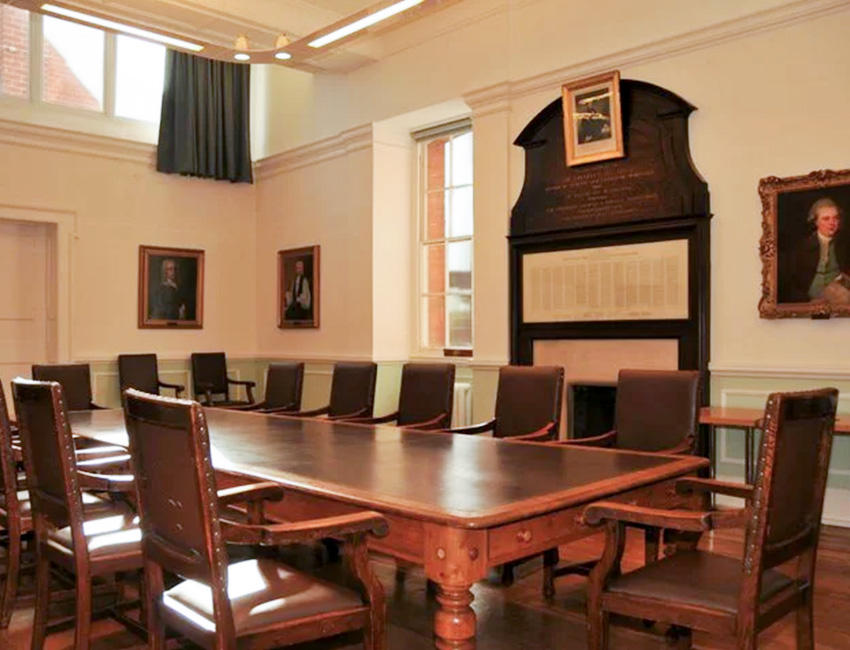
The boardroom is perhaps the most historically important and interesting room at City Campus. Originally known as the physician's room, the boardroom was the location of the inaugural meeting of the Provincial Medical and Surgical Association in 1832. This Association went on to become the British Medical Association (B.M.A.) in 1856.
Around the boardroom you’ll see a number of portraits from both the Worcester Infirmary and the University of Worcester.
James Johnstone the Elder (1730–1802), MD
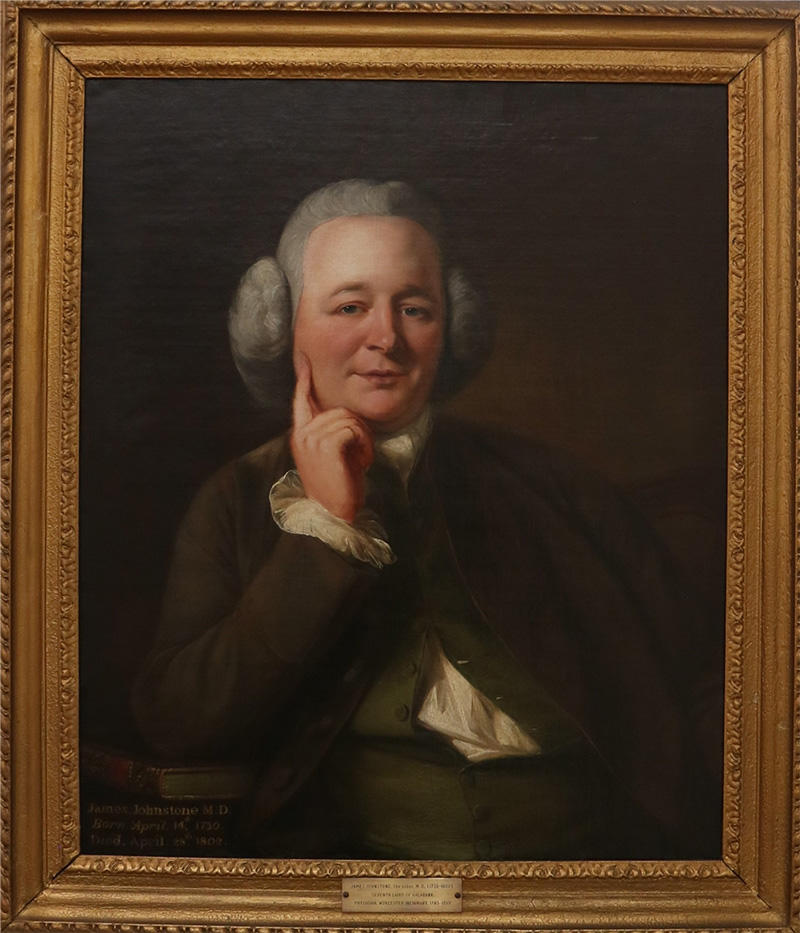
Thomas Gainsborough (1727–1788) (copy after)
After studying medicine at Edinburgh, Johnstone relocated to Kidderminster. The newly qualified doctor was determined to combat an epidemic of putrid sore throat that had gripped the town in the early 1750s.
In 1756, Johnstone documented his findings in a historical dissertation. His warnings against the practice of blood-letting and dangers of disease in parish workhouses were particularly forward thinking.
“The cautions which I enter against known practices or remedies, are also drawn from a repeated observation of their mischievous effects.”
James Johnstone the Younger (1753–1783), MD
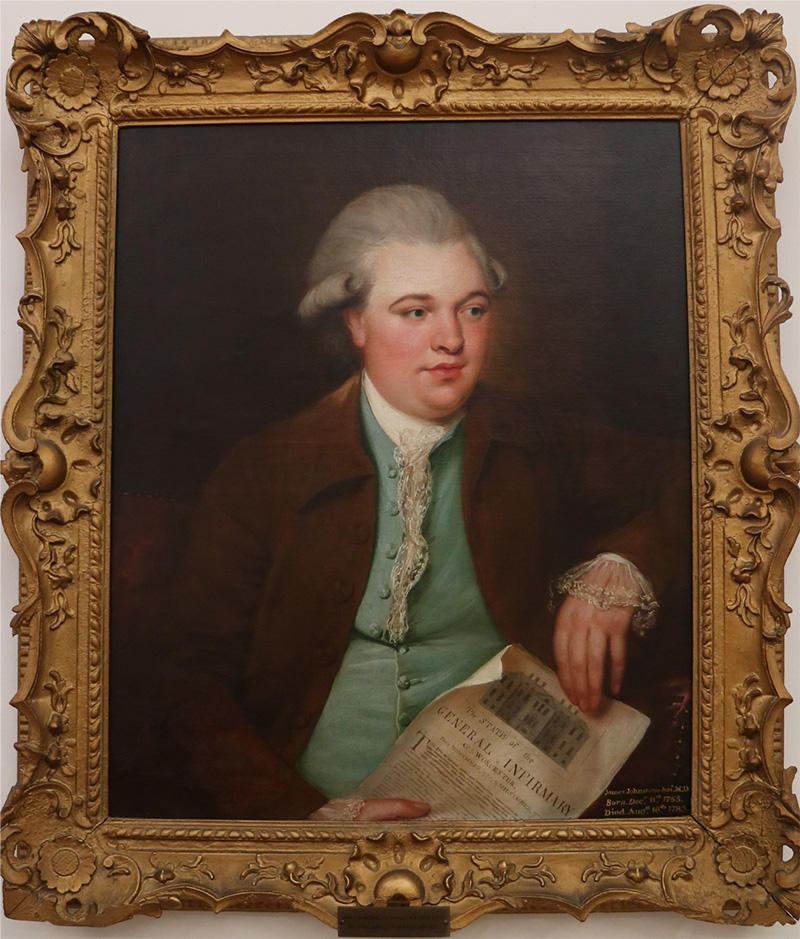
Potentially by John Russell (1745-1806) (copy after)
Johnstone was born in Kidderminster, and baptised at Kidderminster Old Meeting House, the site of which would later become home to Baxter Church.
Like his father, Johnstone studied medicine at Edinburgh university where his work quickly caught the attention of Dr William Cullen, one of the founders of The Royal Medical Society and a key figure in the Scottish Enlightenment.
Johnstone would go on to apply Cullen’s patient-centred approach in his time as a physician at Worcester Infirmary. His time in post was cut short after he caught typhus treating sick prisoners in the County Gaol, dying at the age of 30.
George Woodyatt (1764-1824), MD
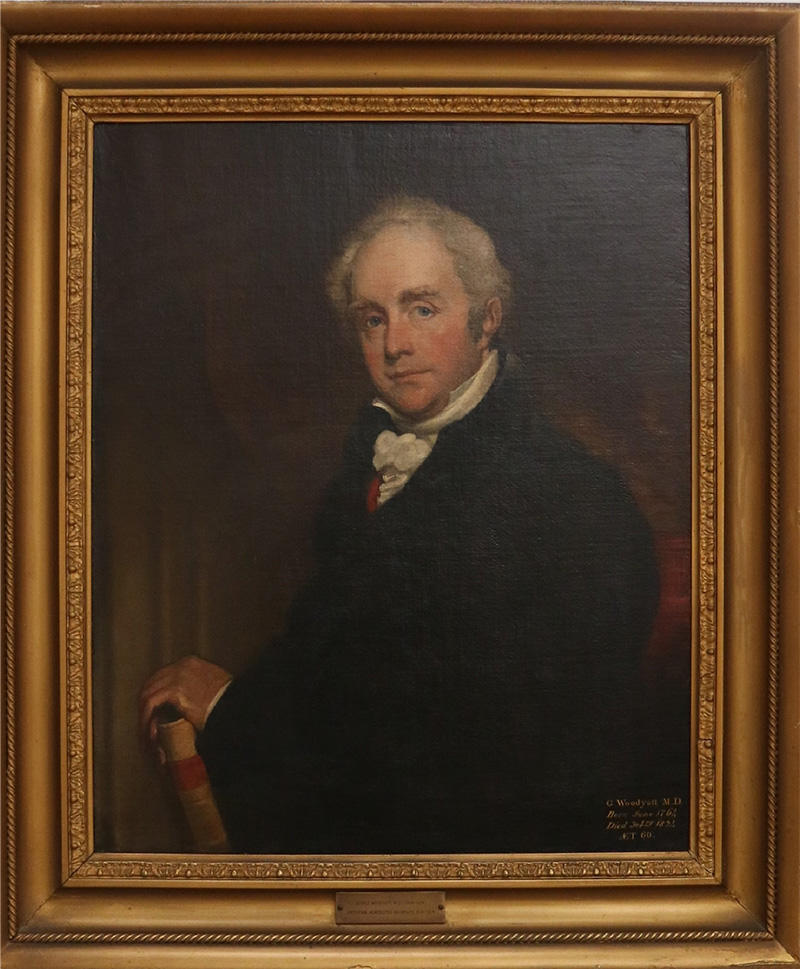
Thomas Ballard (1796–1853) (after William Devis)
Initially practising medicine in his hometown of Ledbury, Woodyatt moved to Worcester in the hopes of being appointed a physician to Worcester Infirmary. He would achieve this goal in 1814, remaining in post until his death in 1824.
Woodyatt had eleven children, many of whom would go on to marry well.
Woodyatt’s eldest daughter Hannah married Charles Hastings, the founder of the British Medical Association while Woodyatt’s son, Thomas, married Harriet Biddulph and lived with her in Great Malvern at Holly Mount House. The house would grow in prominence after a visit by Princess Victoria in 1830.
Joseph Banks, Esq., Chairman (1866-1941)
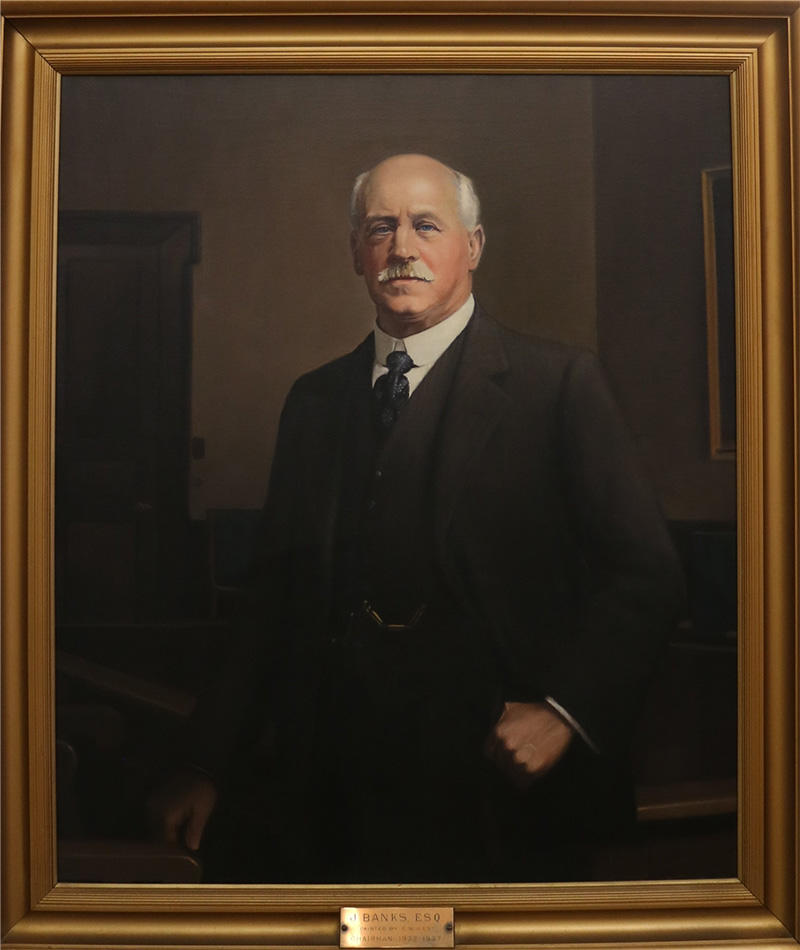
Ernest Waldron West (1904–1994)
Born in West Bromwich, Banks made his fortune as owner of clothing outfitters Bradleys (Chester) Ltd. Banks married Elizabeth Grice with whom he had 5 children, 4 would survive into adulthood.
In 1927, Banks made two purchases. One was a gravestone for his son George, who had died at the age of 8 in 1900, the other was Hallow Park in Worcestershire.
As Chairman of Worcester Infirmary (1932-7), Banks met the Prince of Wales when he opened a new wing of the hospital and celebrated the Infirmary’s merits at the Worcester Hospital Carnival.
Banks’s philanthropy was widely regarded. In 1930 Banks donated £1000 towards new theatres fund at Chester Infirmary and in 1932 he donated £5000 towards Worcester Infirmary’s new wing. After his death in 1941, he left over £8000 to various charities, including £1000 to the Worcester Royal Infirmary, and £2,000 to the British Empire Cancer Campaign.
William Russell (1718–1801), MRCS
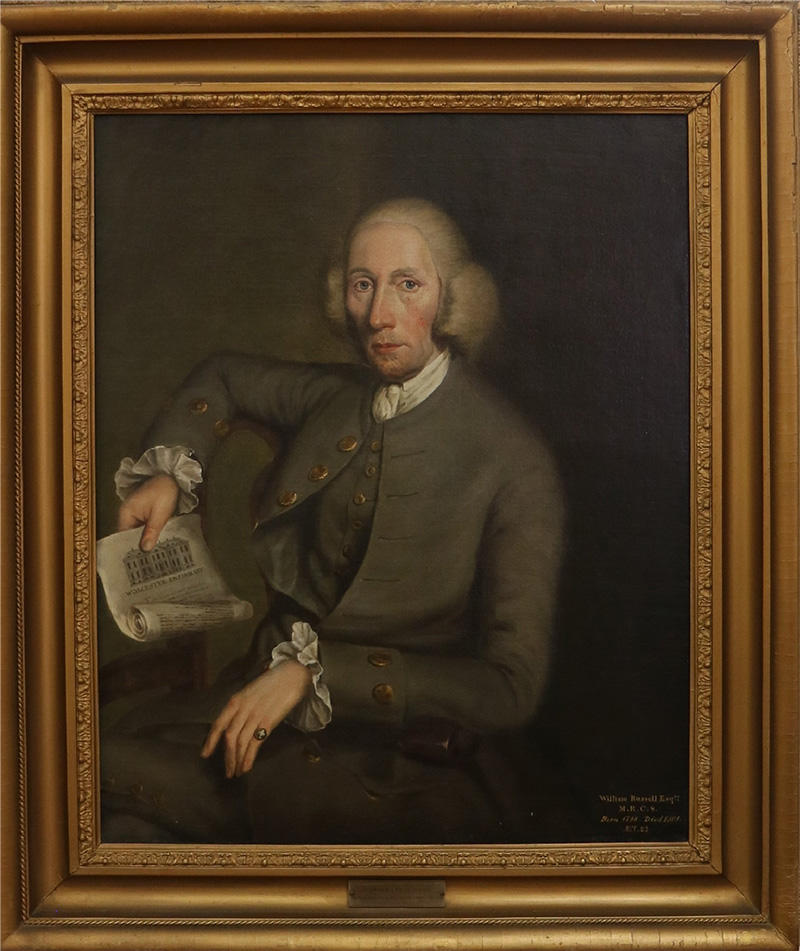
Joseph Bowring (1760 - 1817) (after Stephen Hewson)
William Russell was an integral part of the Infirmary in the first five decades from its founding.
Russell was a surgeon from Shropshire, who moved to Slaughter’s Court, Powick and married Anne Chetle in 1747.
Russell had a close friendship with Dr. John Wall and received a five-guinea ring in the doctor’s will. This did not stop the two from debating each other. Russell was known as a political force within the Infirmary. His occasionally harsh demeanour was a counter to Wall’s ‘unrestrained enthusiasm’ but his criticism of medicine put him at odds with many physicians.
Despite this, Russell was said to be a ‘neat and skilful operator’ who brought respect to the profession of surgeon, and retired from his position as senior surgeon of Worcester Infirmary after 48 years service.
Andrew Blackall (c.1754-1781)
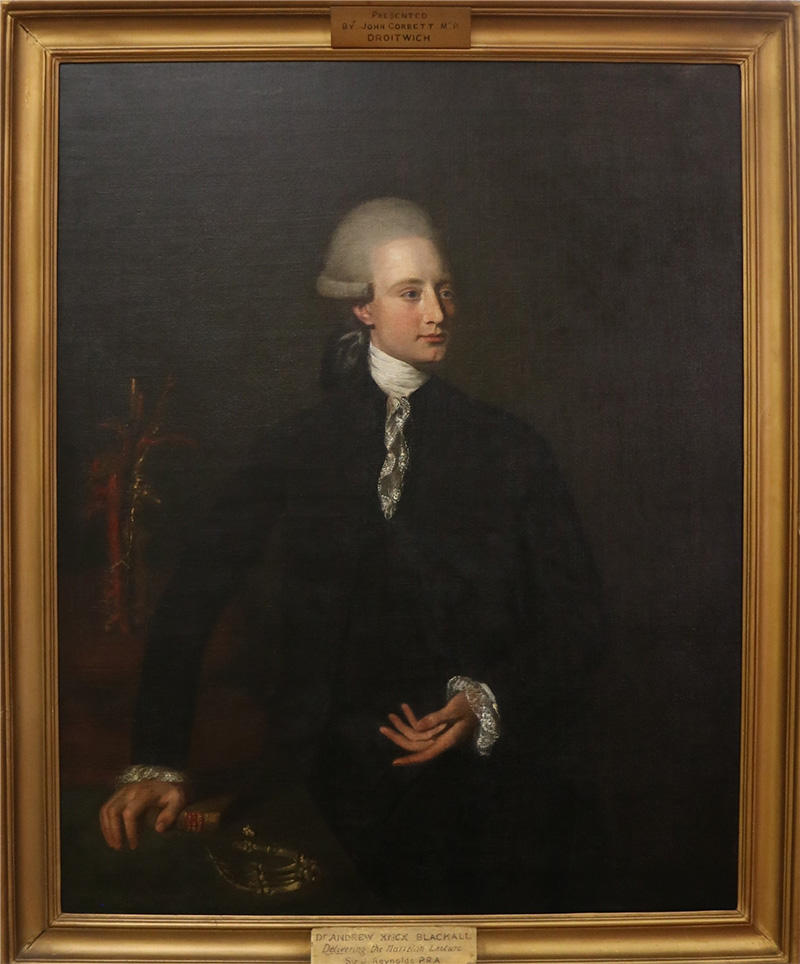
Joshua Reynolds (1723–1792) (school of)
The presence of Blackall’s portrait in Worcester is a bit of a mystery, and the picture’s caption is even stranger! Blackall apprenticed to a surgeon in Dublin, where he associated closely with several key members of the Dublin Medico-Philosophical Society, before moving to London and lecturing anatomy at Thavies Inn.
His time in London was cut short, however, when tuberculosis spread to his throat, weakening his voice so severely he could not be heard by his students.
The picture’s claim, that this depicts Dr. Andrew Knox Blackall delivering the Harveian Oration, is untrue. Blackall was not a doctor, and there is no record of his delivering the oration. The claim that the artist behind the painting was ‘Reynolds’ is also misleading - though who truly painted Blackall remains unknown.
Bishop Isaac Maddox (1697–1759)
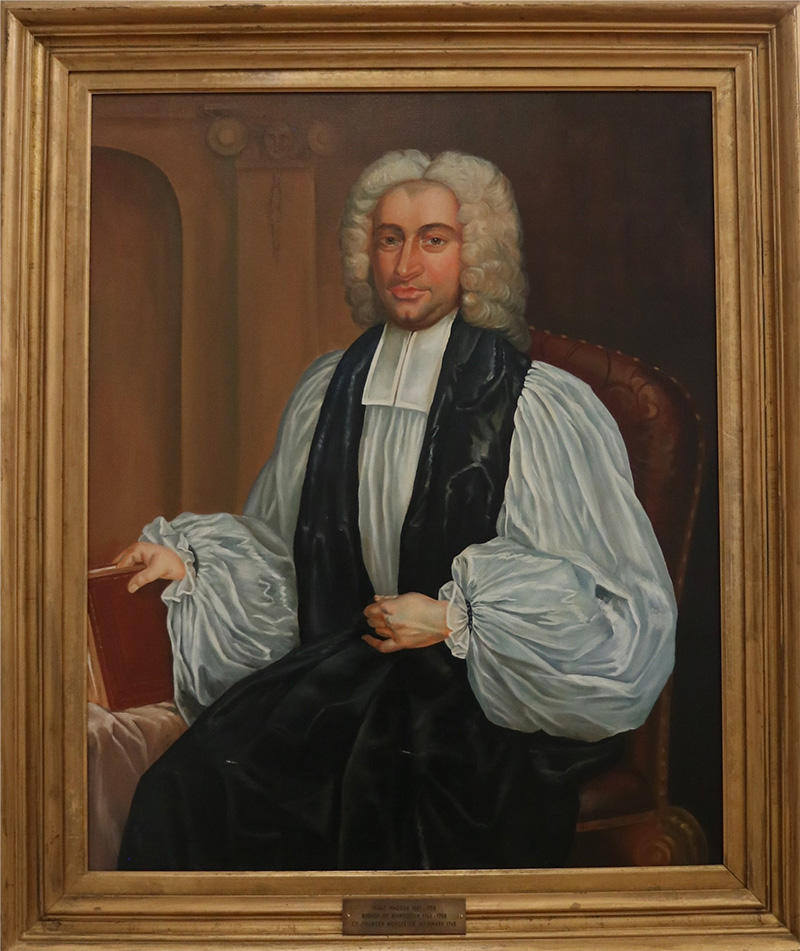
Copy of an earlier painting Francis Clark (b.1948)
Maddox was orphaned at a young age and grew up under the care of his aunt in London. The Presbyterian fund enabled Maddox, who was a prolific reader, to pursue an academic education in Edinburgh after which he gained his deacon’s orders. In 1729 Maddox was appointed clerk of the closet to Queen Caroline, holding the office until 1736, just a year before Caroline died.
In 1731, Maddox married Elizabeth Price. The couple would have three children but only their youngest daughter, Mary Maddox, would survive into adulthood.
Maddox was confirmed Bishop of Worcester in 1743 and settled with his family in Hartlebury Castle. The newly confirmed Bishop had always been a benefactor of London hospitals, and was integral to the founding of Worcester Infirmary.
Maddox died in 1759 and was buried ‘behind the choir’ in Worcester Cathedral.
Dr John Wall (1708–1776), MD
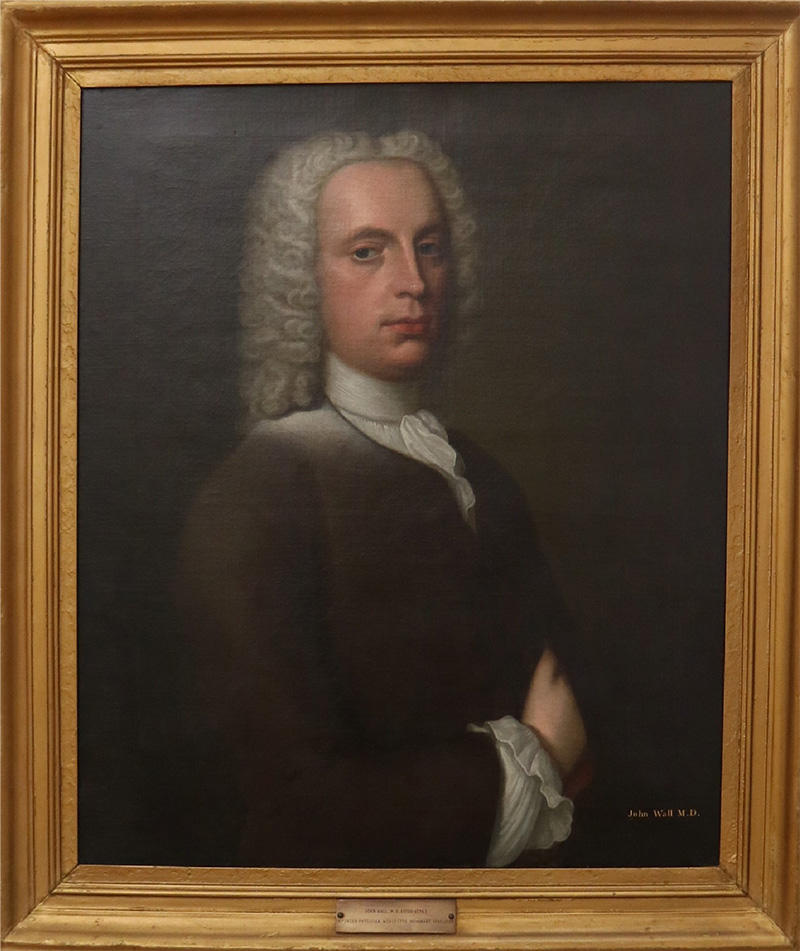
Unknown artist
John Wall was born in Powick, Worcestershire, the only son of John Wall, a former mayor of Worcester, and Catherine (née Cleve). He studied at Worcester College, Oxford, qualifying as MD in 1739.
In 1740 he returned to Worcester and married Catherine Sandys. They had six children and built their house on Foregate Street around 1761.
Wall was a key founder of Worcester Infirmary and maintained an extensive medical practice. He also helped transform Malvern into a spa resort through his claims about the purity and medicinal value of its water. An accomplished artist, Wall exhibited twice at the Royal Academy. In 1751 he opened a porcelain factory in Worcester, aiming to perfect soft-paste porcelain.
Wall died in Bath in 1776 and was buried in Bath Abbey. Catherine Wall lived in Worcester until her death in 1796 and continued to donate to the hospital annually.
James Pook-Sheppard (1784–1854), FRCS
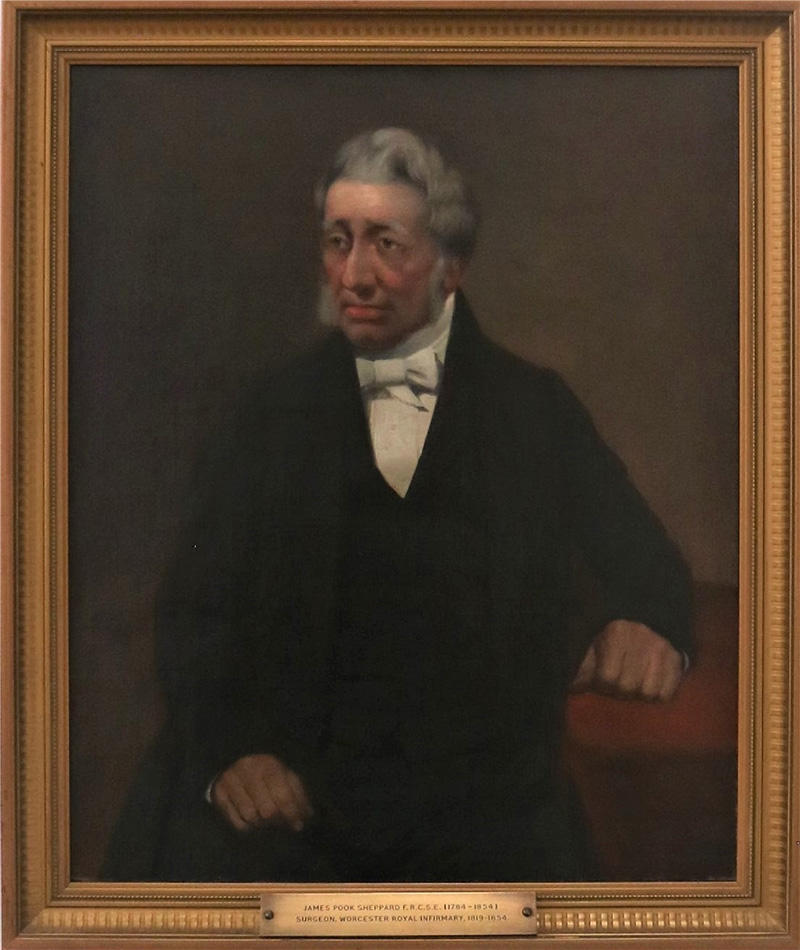
Unknown artist
James Pook-Sheppard was a surgeon from Dorchester who trained at St Thomas’s Hospital before moving to Worcester, where he became a surgeon at Worcester Infirmary.
By 1819 he was living on Foregate Street with his wife, Maria (née Allies), and their growing family.
Sheppard was described as “a God-fearing man of simple tastes, loyal to his colleagues, always willing but of somewhat diffident nature. As a surgeon he had a reputation for being conservative.” He was also noted for his love of books.
In 1828 Sheppard became one of the proprietors and the surgical editor of the Midland Medical Reporter. The publication later became a precursor to the British Medical Association, for which Sheppard was appointed joint Honorary Secretary in 1832, and subsequently served as sole Secretary.
Charles Hastings (1794-1866)
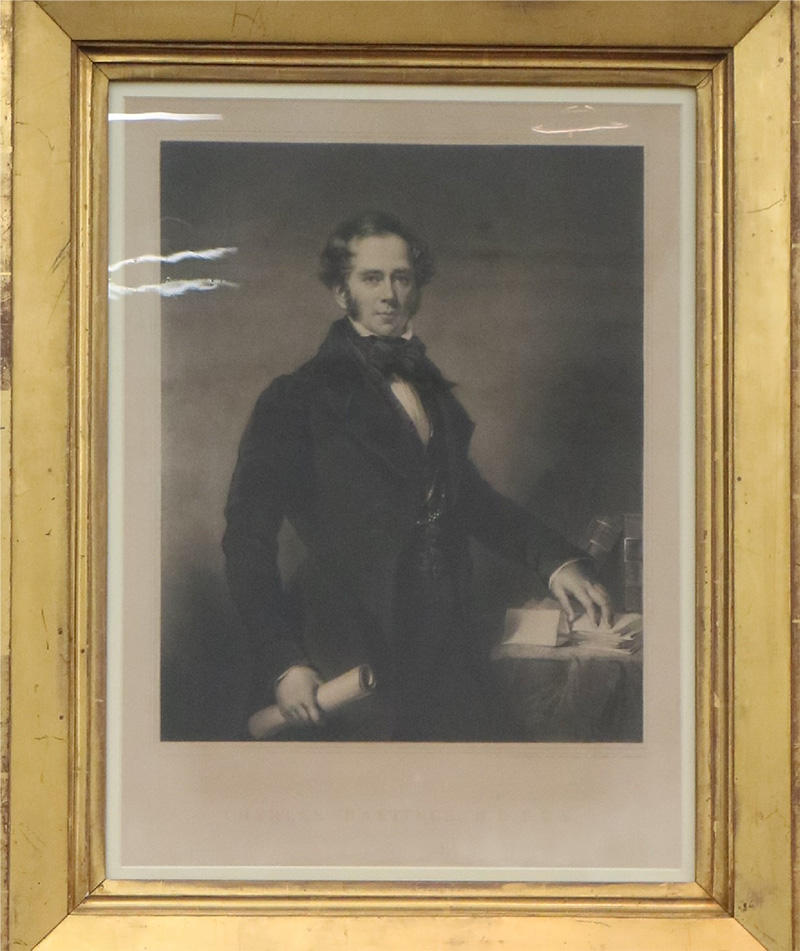
After apprenticing with two apothecaries in Stourport‑upon‑Severn, Hastings applied for the post of House Surgeon at Worcester Infirmary. He was only eighteen and widely considered under‑qualified, yet he won the vote and secured the position. Soon after, he developed an ambition to become a physician and gained a place at Edinburgh in the autumn of 1815.
Hastings returned to Worcester in 1818 and became an honorary physician, a role he held for the next forty-six years. He married Hannah Woodyatt, eldest daughter of George Woodyatt, and they had three children.
In 1828, Hastings founded the Midland Medical and Surgical Reporter, to which he contributed frequently. In 1832, he established the Provincial Medical and Surgical Association, later known as the British Medical Association. He was knighted by Queen Victoria in 1850.
Hastings died in 1866 and was buried at St Nicholas’s Church, Worcester.
John Yelland
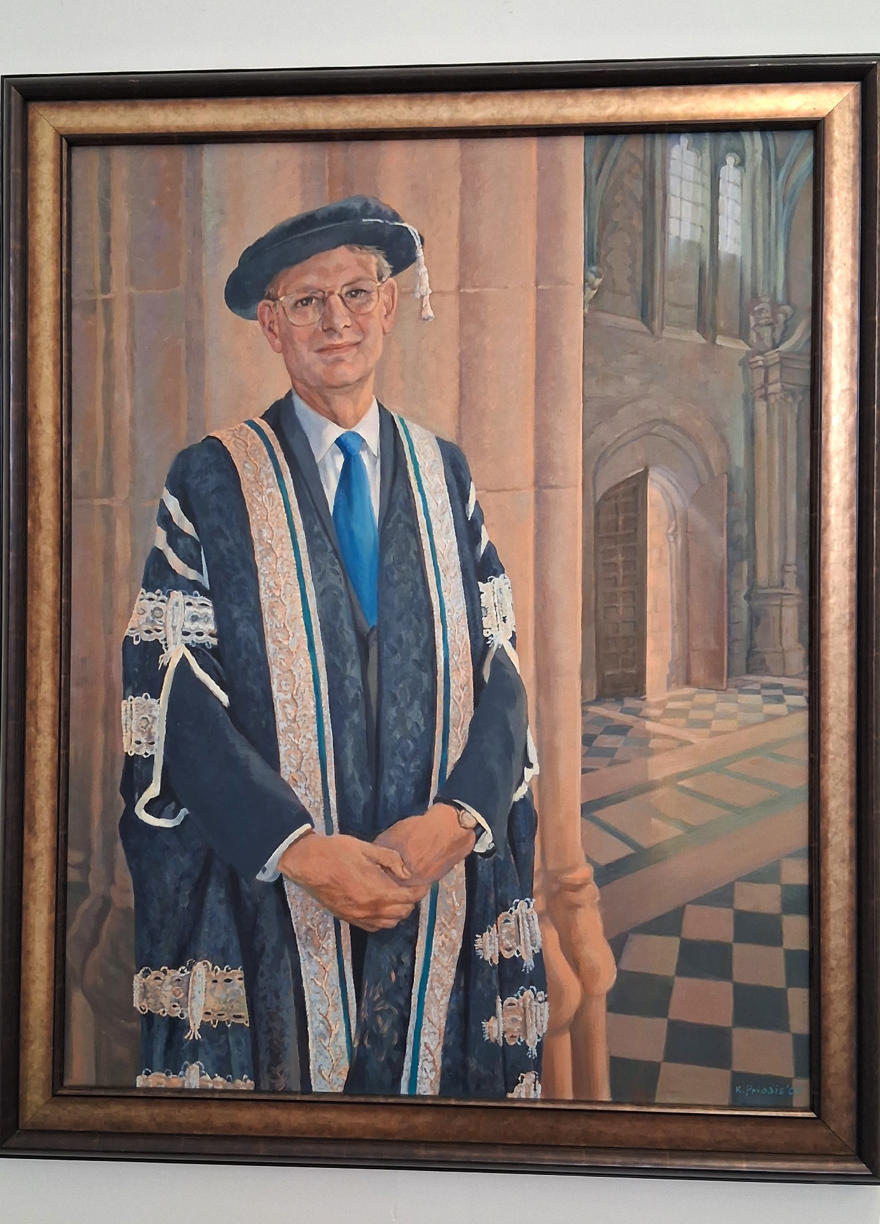
Unknown artist
A former Board of Governor Chair.
Julien Pallet
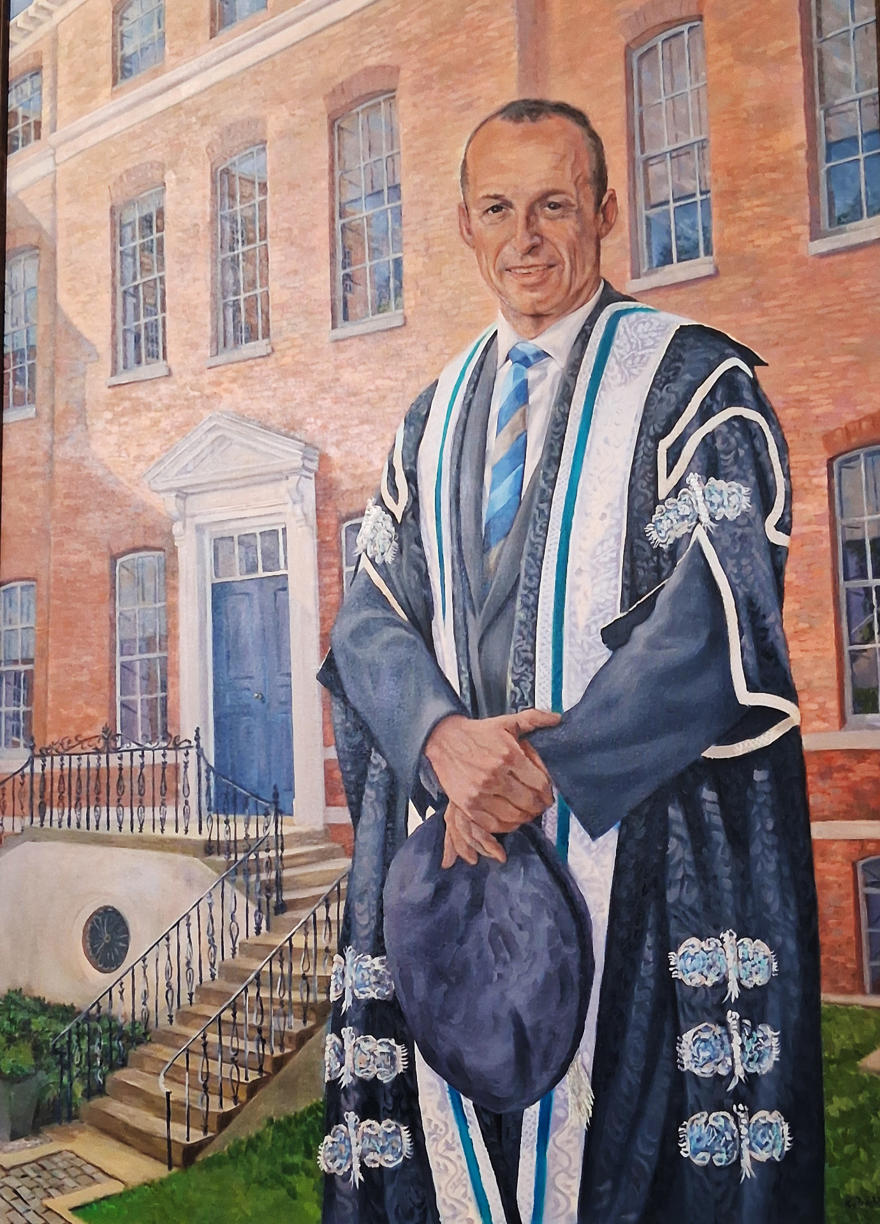
Unknown artist
A former Board of Governor Chair.