Our Accommodation: The Women Who Made Their Mark
In the accommodation village on the St John’s Campus are several buildings named after inspirational women.
From incredible nurses to visionary poets and actresses, the buildings which many students call home for part of their study at the University of Worcester tell some fascinating and inspirational stories.
But not everyone knows their links to Worcester or the inspiring stories which led to them having buildings named after them.
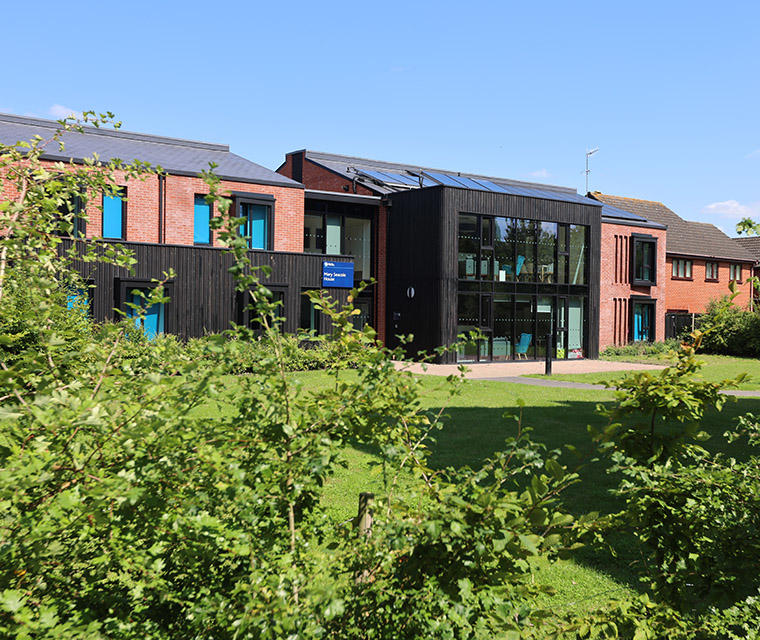 The Mary Seacole Building
Mary Seacole (1805-1881)
Mary Seacole was a Jamaican-born nurse who provided care to wounded soldiers during the Crimean War.
Born to a black mother and a white father, who was a Scottish army officer, at a time when slavery still existed in British colonies, she faced racism and discrimination during her life.
She learned her nursing skills from her mother, who ran a boarding house for injured soldiers, and went to England in her teens before travelling around Cuba, Haiti, and the Bahamas. In 1850, she nursed victims of a cholera outbreak in Kingston, and the following year she treated patients during another outbreak in Panama.
The Crimean War, 1853-1856, saw Britain and a number of other countries fighting the Russian Empire; and Mary wanted to help.
She travelled back to England and asked the British War Office to send her to the region as a nurse to help in poorly equipped medical facilities; she was refused.
So Mary funded her own trip to Crimea, where she established the British Hotel, which provided food, supplies and care for recovering soldiers. She even visited the battlefield at times, and was nicknamed ‘Mother Seacole’ by soldiers.
She died in 1881, but is remembered around the world. There is a statue of her at St Thomas’ Hospital in London, and there is a trust in her name that works to preserve her legacy by promoting healthcare education, diversity, and leadership within the NHS.
The Mary Seacole Trust has a wonderful website full of inspirational information on Mary and her enduring legacy, as well as incredible photographs and even a quiz on this remarkable woman’s life.
The hall of residence named in her honour is the most recent addition to the University’s student accommodation. Developed on the edge of the St John’s Campus, it provides 20 luxury en-suite rooms including two accessible tooms adapted for wheelchair use and an associated carer’s room adjacent.
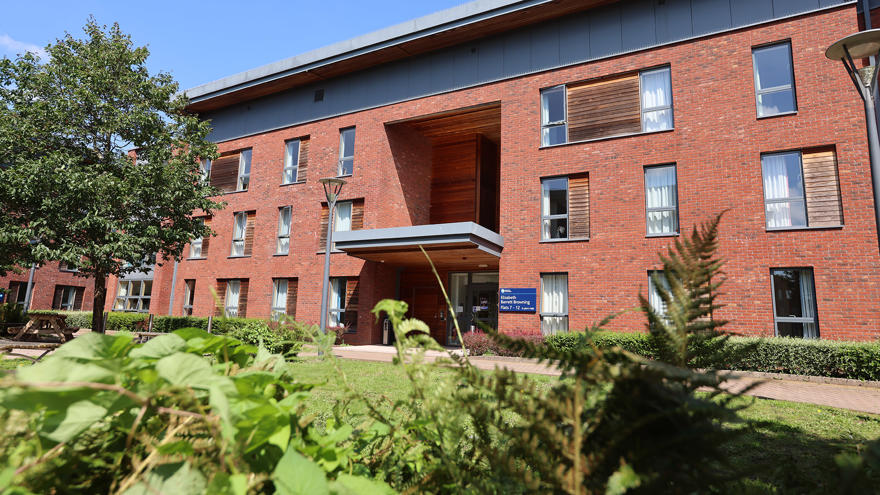 Elizabeth Barrett Browning Halls
Elizabeth Barrett Browning (1806-1861)
How do I love thee? Let me count the ways…
The opening lines to one of Elizabeth Barrett-Browning’s most famous poems has an enduring charm; but her catalogue of works covered far more than love. They explored politics, suffering & illness, identity & faith, and much more.
She was born in County Durham but moved at a very young age to Hope End, near Ledbury, about 10 miles as the crow flies from the University of Worcester’s St John’s Campus where a modern accommodation block proudly preserves her name.
Elizabeth began writing poetry, and her writing was well established before in 1846 she married the poet Robert Browning in London.
The poets moved to Italy, where they spent the rest of their married life together. The Browning Society has a comprehensive history of her life and their website is well worth exploring.
The building named after her is one of several accommodation facilities on the University’s St John’s Campus. The rooms are light and airy, and furnished in a contemporary style.
The residence itself matches an adjacent building, another accommodation block, named in honour of the famous poet A E Houseman. Both were completed in 2009 to answer an increase in demand for living facilities for students wanting to make St John’s Campus their home for the first year of their studies.
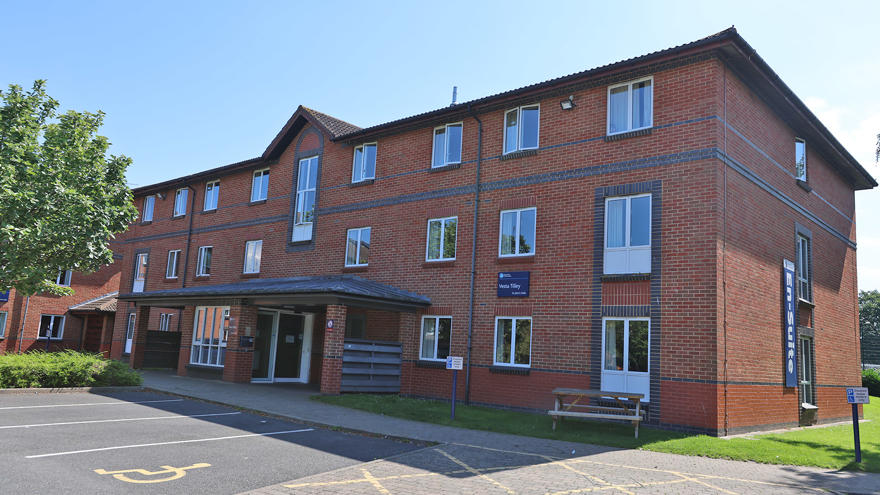 Vesta Tilley Halls
Vesta Tilley (1864-1952)
Worcester born Vesta Tilley was one of the most famous performers in the music-hall genre.
She became famous around the world as one of one of the most well-known male impersonators of her generation. A BBC Women’s Hour article states she started wearing men’s clothes on stage at the age of five, as she found it easier to express herself if she was dressed as a boy.
At the height of her career, she was one of the highest-paid women in Britain, and became known as “England’s greatest recruiting sergeant” during the WWI, since young men were sometimes asked to join the army during her shows.
Legend has it that so many people enlisted after a show she was performing in London that they became known as “The Vesta Tilley Platoon”.
She toured far and wide, and there are many lovely resources giving more information on her act, life and legacy, such as this fascinating summary on the website of Brighton and Hove Museums.
She is remembered in the name of an accommodation block in the main cluster of buildings in the heart of the St John’s Campus.
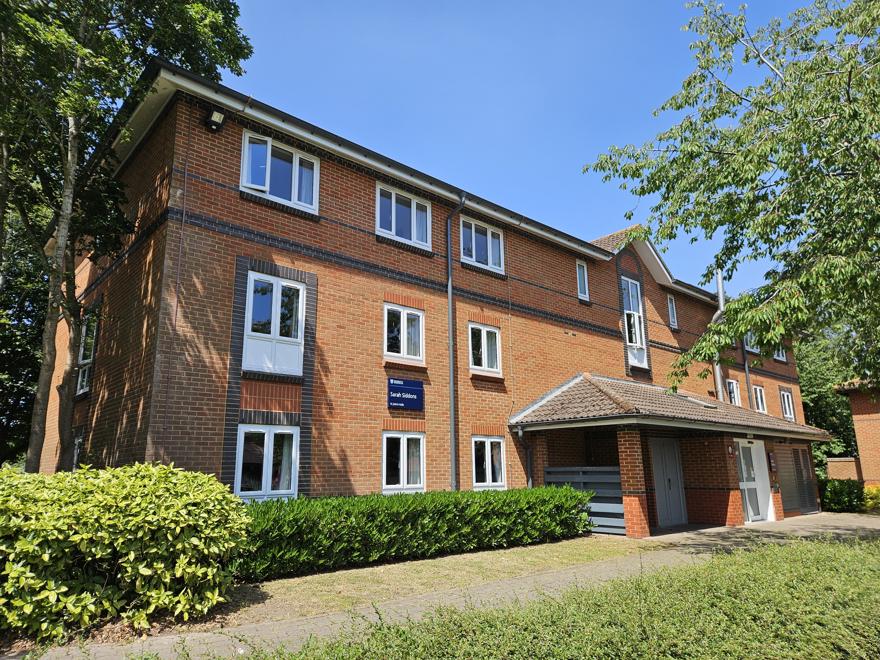 Sarah Siddons Halls
Sarah Siddons (1755-1831)
The second star of stage on this list, Sarah Siddons was the eldest of 12 children born to Roger and Sarah Kemble- who led a troupe of traveling actors.
Sarah was an actress who performed in the city early in her career: notably when she played Rosalind in a performance of As You Like It in a barn which stood on land which is now retail and leisure units just opposite Worcester’s Guildhall; you can still see the Blue Plaque placed on the building by the city’s Civic Society.
When the plaque was unveiled in 2020, the BBC covered the event and produced a fantastic overview of the life and career of Siddons which you can read here.