From its beginnings as a post-war teacher training college in 1946 to a flourishing university at the heart of Worcester, our story is one of opportunity, inclusion and transformation.
Since our foundation, we have helped people realise their potential through education while serving the needs of our city, region and wider society. Today, that commitment remains at the heart of everything we do.
1940s: A university built on purpose
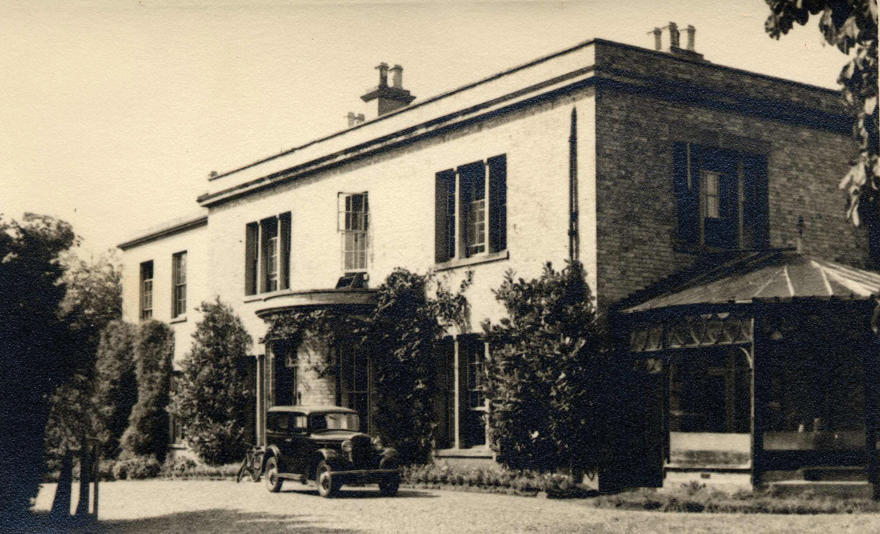 Henwick Grove
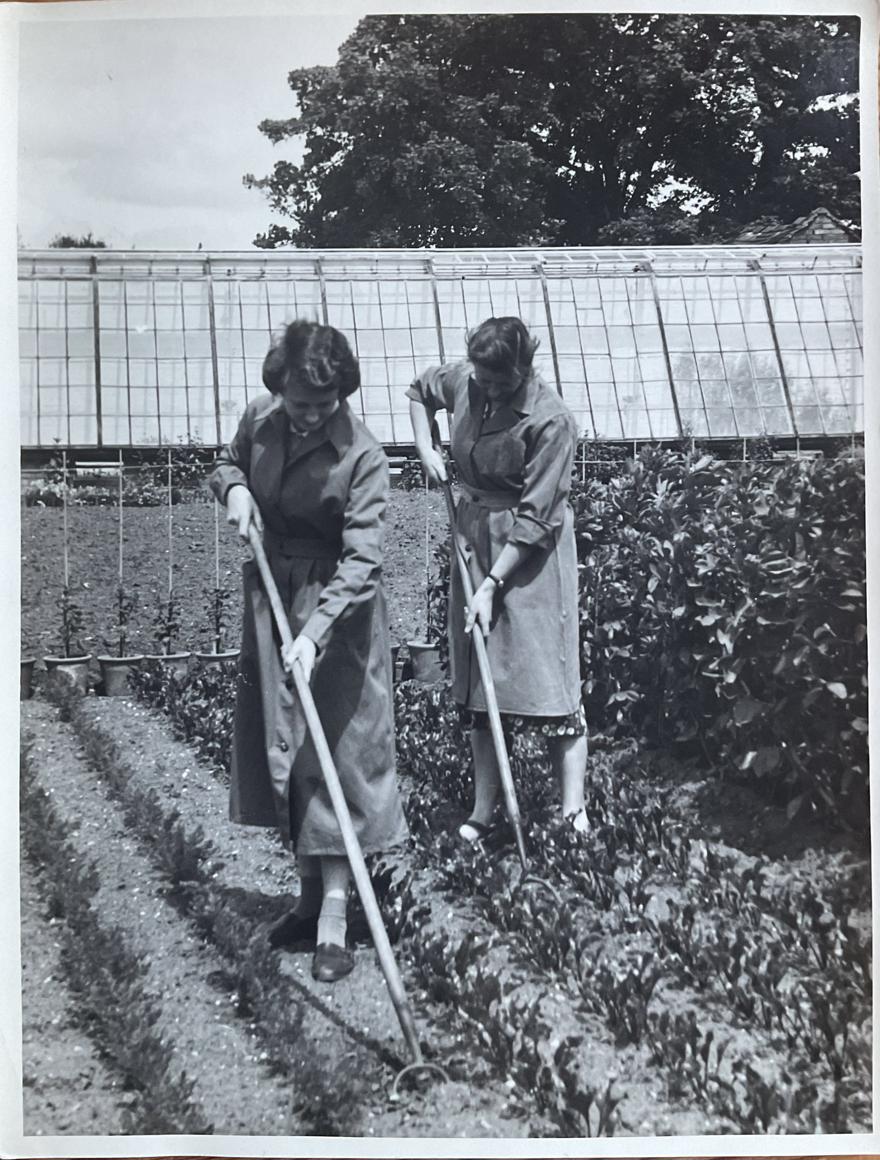 Students working in Henwick Grove gardens in the late 1940s
The University of Worcester was founded in 1946 as Worcester Emergency Teacher Training College with a mission to “win the peace through education”.
At the end of the Second World War, Britain was facing an urgent shortage of teachers, and the institution was established to help meet that national need.
Our St John’s Campus was established through a remarkable act of generosity. Henwick Grove had been owned by the Binyon family since 1861, and on her death in 1942, Gulielma Binyon – cousin of the poet Laurence Binyon, author of For the Fallen, from which the famous words ‘They shall not grow old…’ are taken - offered the estate to Worcester City Council for educational purposes. However, with the war still raging, plans for education had to wait and the site was requisitioned by the Air Ministry, which constructed a series of temporary buildings across the grounds.
In 1946, the buildings that had served the nation during war were eventually transformed into a place dedicated to rebuilding Britain through education. From these humble beginnings at Henwick Grove grew the institution that would eventually become the University of Worcester.
Our first students were largely former servicemen and women returning from wartime service and seeking new opportunities in civilian life. Together, staff and students created a distinctive culture built on community, opportunity and public service. Those values became an enduring part of the institution's identity and continue to influence the University's work today.
1950s to 1980s: Growing beyond teacher education
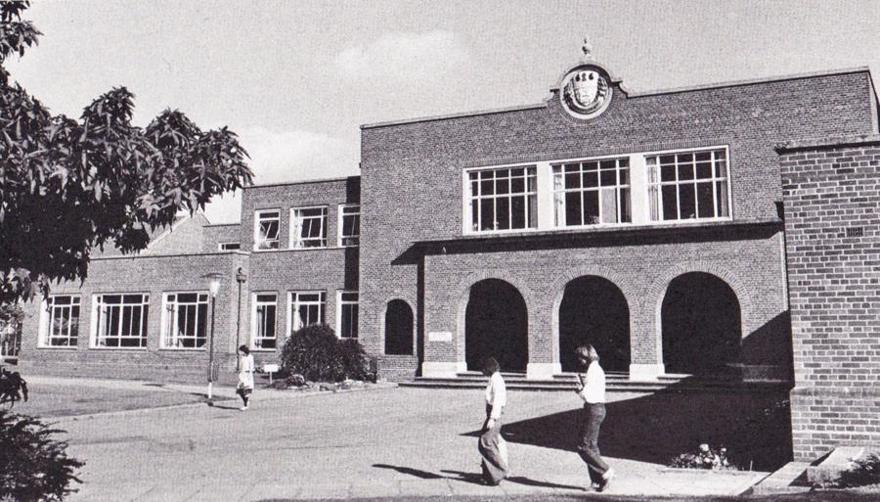 St John's Campus Main Reception in the 1960s
Two years after being founded, the institution was rebranded as City of Worcester Training College and throughout the 1950s, 1960s and 1970s, went on to establish a national reputation for teacher education while expanding into new areas of study.
The College became a leading centre for Rural Studies, reflecting a close relationship with the surrounding countryside and communities of Herefordshire and Worcestershire. It also pioneered professional development courses for practising teachers and adult learners, laying the foundations for today's commitment to lifelong learning.
In 1976, the institution became Worcester College of Higher Education, with leaders expressing an ambition that once seemed bold: the creation of a University of Worcester.
As higher education expanded nationally, Worcester broadened its academic offer and introduced degree-level programmes validated by the Council for National Academic Awards (CNAA). This marked an important step in the University's journey towards academic independence, which came following the Education Reform Act of 1988, opening the door to new opportunities and ambitions for the future.
1990s to 2005: From college to university

The final decades of the 20th century brought enormous change. Worcester expanded into health, business, humanities, science and professional studies. A particularly significant development came in 1995 when Nursing and Midwifery education became part of the institution. This reflected growing demand for professional healthcare education and marked an important step in the University's evolution from a specialist teacher training college into a broader higher education institution serving the needs of the region's public services and workforce.
The addition of healthcare education helped shape the University's future direction, supporting further investment in health-related teaching, research and professional partnerships over the following decades. Alongside this growth, we built an expanding research culture, secured taught degree-awarding powers and became University College Worcester.
In 1997, degree-awarding powers were granted and in September 2005, nearly 60 years after our foundation, we were granted full university status by the Privy Council and became the University of Worcester.
2005 to Present: Transforming Worcester
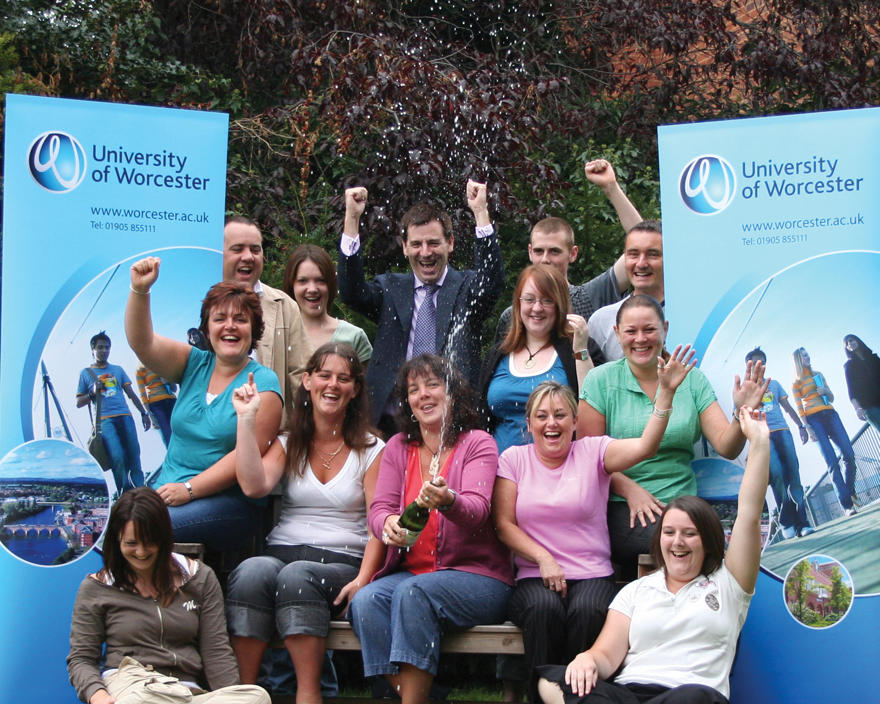 A celebration to mark the award of university status
The award of university status marked the beginning of a period of remarkable growth.
Expanding from our historic St John's Campus, we developed a major presence in the heart of the city. The former Worcester Royal Infirmary site was transformed into a new City Campus, opening in 2009 and bringing new educational, cultural and community facilities into the city centre.
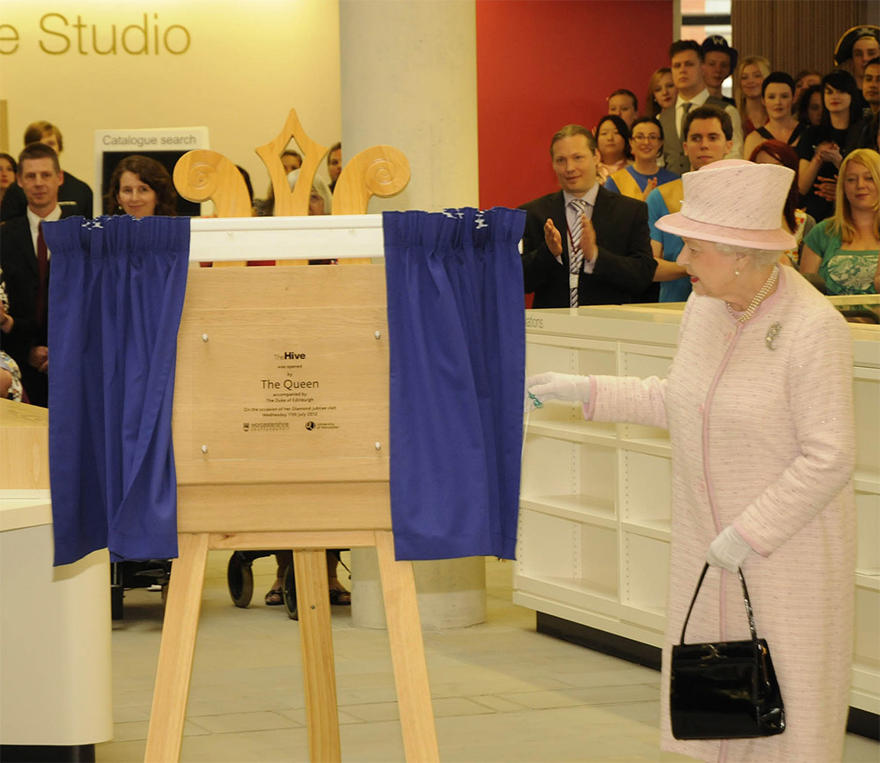
Further major developments followed, including The Hive, opened by Queen Elizabeth II in 2012 as Europe's first fully integrated university and public library. This landmark facility, developed in partnership with Worcestershire County Council, has become a beacon of success for the entire community.
The following year, the University of Worcester Arena opened on the site of the long-derelict Worcester fruit and vegetable market. The Arena was the UK's first purpose-built indoor arena for wheelchair sport and has gained a national reputation for supporting the growth of disability sport.
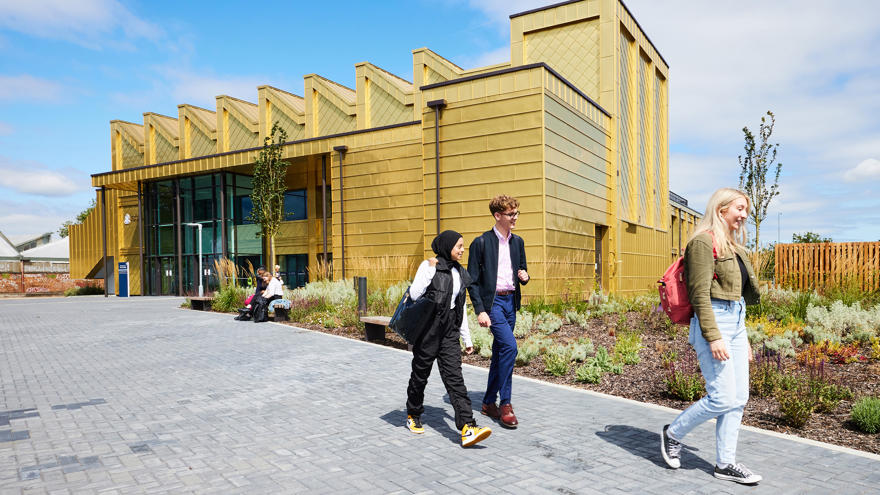
These developments were followed by The Art House and the acquisition of the Lakeside Campus. More recently, the University has invested in the Severn Campus for Health and Wellbeing, creating modern facilities for education, research and professional practice. Building on the introduction of Nursing and Midwifery education in 1995 and the continued expansion of healthcare provision, the campus has become a centre for health education. This journey reached another milestone in 2023 when the Three Counties Medical School welcomed its first students, helping to address healthcare workforce needs across the region.
While we have grown dramatically, our mission has remained remarkably consistent: helping people realise their potential through education and preparing them for successful futures.
A university working for common purpose
Since 1946, Worcester's development has been closely connected to the communities it serves.
Through partnerships with schools, healthcare providers, cultural organisations, businesses and public bodies, the University has contributed to the social, economic and cultural life of Worcestershire and the surrounding region. Landmark projects such as The Hive, the University of Worcester Arena, City Campus and the Severn Campus have helped regenerate key sites, expand public access to education and culture, and support regional development.
The University's original founders believed education could help build a better future after war. Eight decades later, that belief continues to guide our contribution to the city, region and wider society.
Timeline
-
1946 – Worcester Emergency Teacher Training College is founded in 1946, in the shadow of the Second World War. Just two years later, it becomes the City of Worcester Training College, laying the foundations for the institution we know today.
-
1950s – The College develops a nationally recognised reputation for Rural Studies, reflecting its strong connections with the countryside, communities and industries of Herefordshire and Worcestershire.
-
1976 –Renowned for excellence in teacher education, the institution continues to grow in stature and becomes Worcester College of Higher Education.
-
1988 – Following the Education Reform Act of 1988, Worcester becomes an independent corporation, opening the door to new opportunities and ambitions for the future.
-
1995 – New subject areas, including Nursing, broaden the institution's reach and impact.
-
1997 – Taught degree-awarding powers are granted, marking a major milestone on the journey to university status.
-
2005 – The Privy Council awards full university status, creating the University of Worcester.
-
2009 – The University expands beyond its St John’s Campus opening the City Campus in the grounds of the former Worcester Royal Infirmary. It also opens new halls of residence and the Charles Darwin building at St John’s Campus.
-
2010 - The University gains the power to award its own research degrees, strengthening its ability to generate knowledge and address societal challenges.
-
2012 – Queen Elizabeth II opens what is Europe's first fully integrated university and public library – The Hive - creating a landmark civic partnership and a shared space for learning, culture and community.
-
2013 – The University of Worcester Arena opens as the world's first indoor sports arena purpose-designed for wheelchair sport, helping establish Worcester as a global centre for inclusive sport.
-
2016 - A new School of Law opens at Jenny Lind, expanding professional education and strengthening links with legal and public service organisations.
-
2021 – The General Medical Council approves plans for the Three Counties Medical School, created to help address regional shortages of doctors and strengthen healthcare provision, with the first students beginning their studies in 2023.
-
2023 – The Severn Campus for Health and Wellbeing begins to evolve with the opening of the Elizabeth Garrett Anderson building opens, a transformation of the former Worcester News local newspaper printworks, to create new healthcare training facilities.
- 2025 – The Duke’s Building opens at the Severn Campus, increasing capacity for healthcare education and helping meet growing workforce needs across the NHS and wider health sector.
You can also see a 2005 to 2025 timeline produced as part of our anniversary celebrations.