Butterflies, fieldwork and conservation: Working with a local conservation charity for my dissertation
Throughout my Geography degree, I became increasingly interested in ecology and species conservation, and I knew I wanted my dissertation to explore this area. I didn't initially know what that project would look like, but my dissertation journey actually started while I was still in Darwin, Australia, during my year abroad.
In June, my Personal Academic Tutor, Fleur Visser, got in touch with me to start discussing my dissertation. We spoke again in July to develop some ideas, and Fleur suggested looking into working with Butterfly Conservation. This immediately sounded like an exciting opportunity, especially as I could see myself pursuing a career in species conservation after university. Fleur later became my dissertation supervisor and continued to support me as the project developed.
When I returned to the UK after my year abroad, I continued discussing the project with Fleur. She had previously worked with members of the Butterfly Conservation team, Liz and Mel, on work involving drone imagery to collect surface temperature data. She passed their details on to me, and I got in touch.
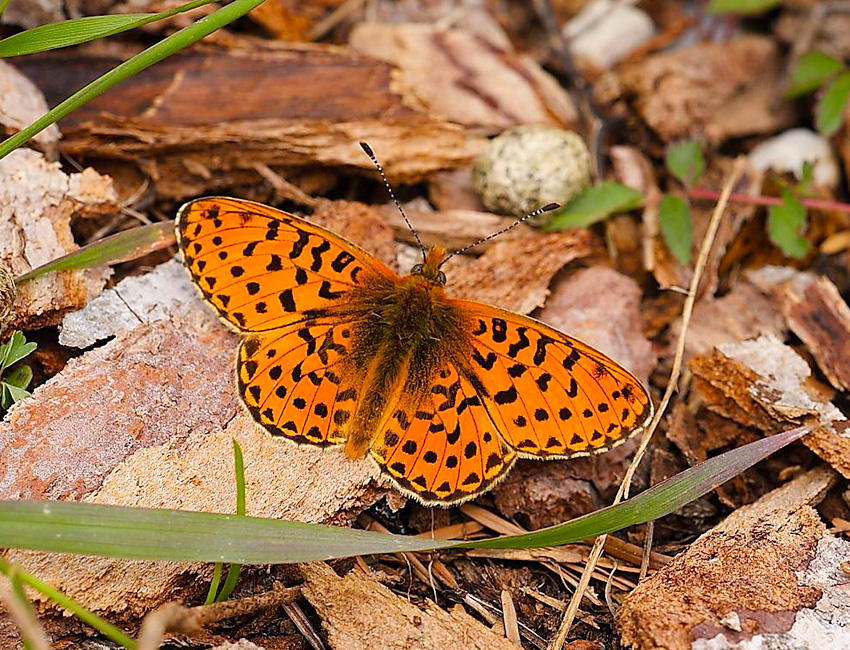
What began as a conversation about possible dissertation topics eventually became an opportunity to work alongside a real conservation organisation on the reintroduction of the Pearl-bordered Fritillary butterfly.
The dissertation
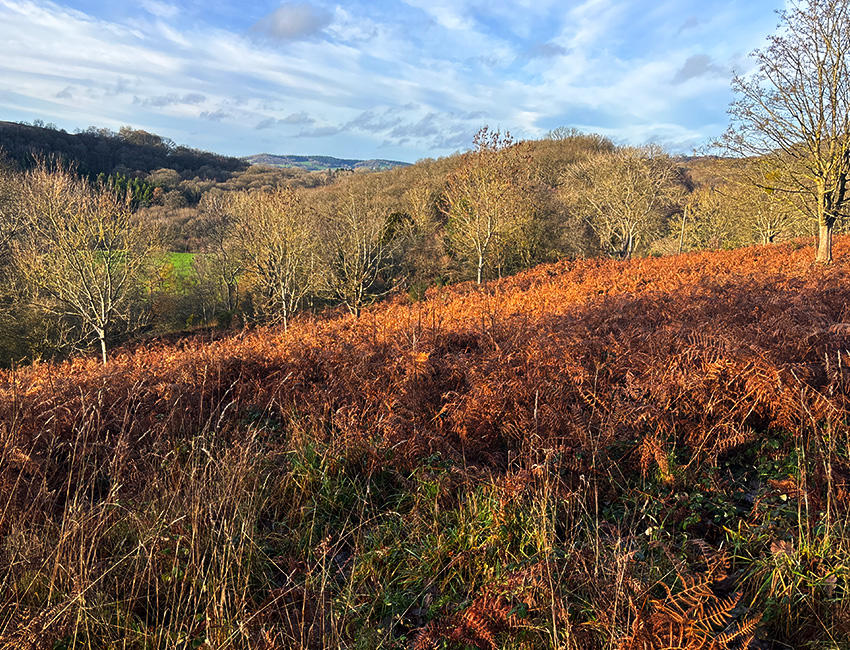
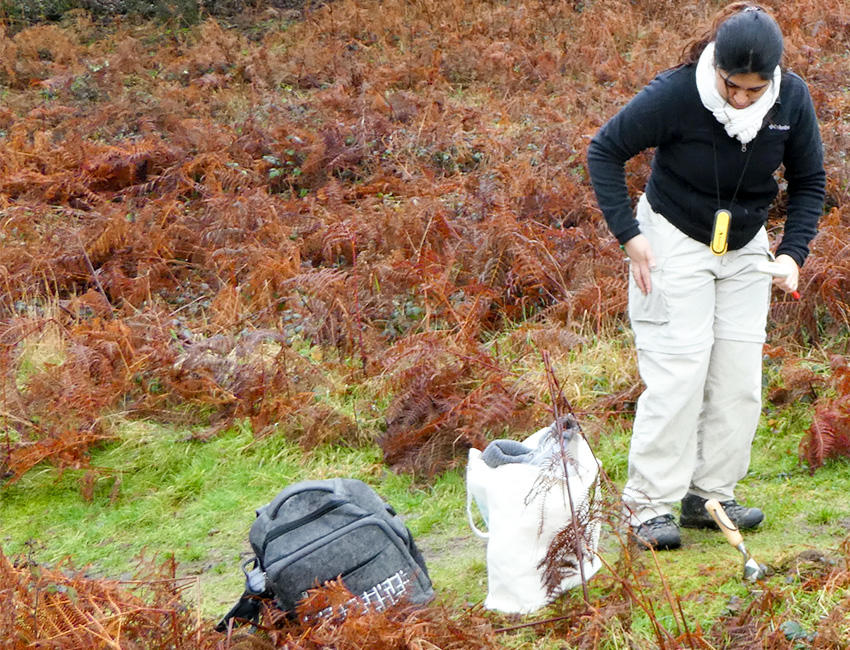
My fieldwork took place at Bromesberrow in the Malvern Hills, where Butterfly Conservation is working on the Lost Fritillaries Project. I collected soil and environmental measurements from areas where dog violet, the main food plant for their caterpillars, was either present or absent before analysing soil samples back at university. I also used existing data from Butterfly Conservation, including records of adult butterfly activity and thermal imagery, which allowed me to look at the relationships between the soil, plants, microclimate and butterflies.
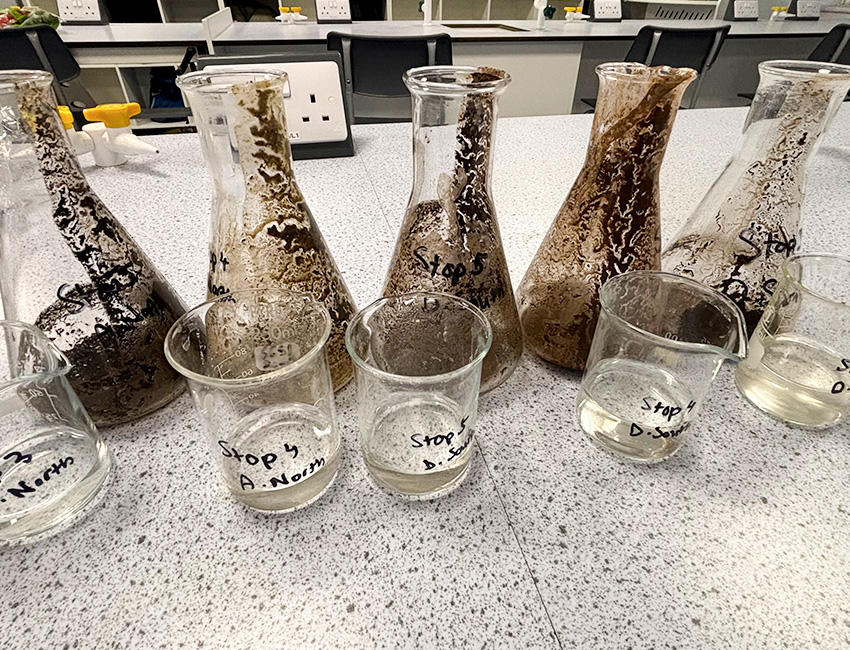
What I enjoyed most was being able to see these environmental patterns for myself in the field. I wasn't just analysing numbers on a screen; I was standing in the habitat taking measurements and thinking about why the conditions might differ from one location to another. I then brought those samples back to university and carried out laboratory analysis before bringing everything together through statistical and spatial analysis.
What I learnt from the experience
One of the main things I learnt was how different carrying out your own research can be from completing smaller university assignments and practicals. I had to make decisions for myself throughout the project, from adapting my sampling when things in the field didn't match the existing data to managing the different stages of the research. It made me more comfortable with things not always going exactly to plan and having to work things out as I went.
At the same time, I realised that although a dissertation is an independent piece of work, having people around you can make a huge difference. Fleur was there throughout the development of the project and helped me turn an initial idea into something I could actually investigate.
Liz and Mel supported me with the practical side of working at Bromesberrow. James Atkins, a Technician Instructor in GIS, Geophysics and Surveying, helped me with the mapping side of the project, while Dominic Howard, a Geography Environmental Technician, helped me with the laboratory work.
It also showed me how important communication is when a project involves lots of different people and moving parts. I had to organise fieldwork, communicate with Butterfly Conservation and university staff, manage my time and keep the project moving while still making the decisions myself.
Most importantly, the experience helped me realise how much I enjoy this type of work. I particularly liked being outdoors collecting data and then investigating what was happening in the environment through the data I had collected. Being able to carry out research in the same landscape as the species I was studying made the project feel much more meaningful and reinforced my interest in pursuing a career involving environmental fieldwork and conservation.
Working with Butterfly Conservation
Working with Butterfly Conservation was a big part of what made this dissertation different from a typical university project. Instead of researching a conservation issue in theory, I was able to work alongside people directly involved in the reintroduction of the Pearl-bordered Fritillary and visit one of the sites where that work was taking place.
Liz and Mel were a huge help throughout the project. Their knowledge and the reintroduction work helped me understand the site and shape my research, while they also provided practical support with the fieldwork, including transport and helping me on site.
My first visit to Bromesberrow was definitely an experience in itself. Emma and I travelled by train and taxi before hiking to the site with all our equipment, gradually losing mobile signal as we got further into the hills. Liz and Mel met us on the hillside, and what started as my first visit ended up becoming a useful trial run for the fieldwork and helped me refine my approach for the next visit.
I was also able to use information collected through the project that I wouldn't have been able to collect through my own fieldwork alone. Butterfly Conservation provided the vegetation data that helped me plan my sampling, as well as records collected by trained volunteers during the 2025 flight season. Being able to work with data from an ongoing conservation project made the research feel much more connected to what was actually happening on the ground.
One of the things I appreciated most was being able to learn from people already working in conservation. Liz and Mel's knowledge, enthusiasm and commitment gave me a better insight into the practical side of species conservation and how research can fit into wider habitat management and reintroduction work. As someone interested in pursuing a career in environmental conservation, that experience was really valuable to me.
Advice for students
If I were giving advice to another student thinking about working with an organisation as part of their course, I would definitely encourage them to consider it. For me, one of the biggest benefits was being able to connect what I was learning at university to work that was actually happening beyond the university. It made my dissertation feel like it had a purpose beyond being an assignment.
At the same time, it is important to remember that a dissertation is still an independent piece of work. Although I had support from Butterfly Conservation, my tutors, technicians and friends, I was responsible for keeping the project moving. I had to stay organised, communicate with everyone involved, arrange my fieldwork, manage deadlines and balance the dissertation with the rest of university life. This gave me a much better understanding of the independence and organisation involved in carrying out your own research.
I would also say not to worry about having everything figured out from the beginning. My original idea changed as I learnt more about the conservation work and what I could realistically investigate for my dissertation. Working with an organisation allowed me to shape the project around the conservation work already taking place while still keeping it focused on something I was genuinely interested in.
Overall, working with Butterfly Conservation made my dissertation feel much more connected to the real world. I was able to apply what I had learnt at university, develop practical research skills and see how research can contribute to wider conservation work. The experience also gave me a much clearer idea of the type of work I would like to pursue in the future, particularly work that combines environmental fieldwork, data collection, and conservation.
The experience has also given me a much clearer idea of the type of work I would like to pursue in the future, particularly a career in environmental conservation involving fieldwork and environmental data collection. Now that I have graduated, I am looking to build on the experience I gained during my degree, continue developing my practical skills and explore where a career in conservation could take me, both in the UK and abroad.