At Worcester you’ll learn from our team of experts across a broad range of disciplines. This accredited course will also provide you with a Chartered Management Institute (CMI) Certificate in Management and Leadership, which will help you progress your career.

This course has been mapped for accreditation with the Chartered Management Institute (CMI). You will be awarded a CMI Level 5 Certificate in Management and Leadership, in addition to your degree, upon the successful completion of the entire degree.
During your studies, you will also benefit from associate membership to the CMI (at no extra cost), inclusive of an interactive induction session hosted by the CMI, as well as access to the CMI's digital library, resources, and employability skills audit.
Overview
This course is designed for people already working in health and social care who want to move into more senior or specialist roles, including existing and aspiring managers. Taught flexibly with most sessions online, you can fit your learning around your life while still getting the support you need to succeed.
Building on your knowledge of person‑centred care, you’ll explore key areas of modern practice including inclusion and diversity, safeguarding, mental health, communication and leading change in teams and services. Everything you learn is linked to real situations you’ll recognise from your own work.
You’ll also look at fairness, health and social issues, ethics and cultural, political and economic factors, and how these shape people’s experiences of care. With support from your lecturers, you’ll learn how to investigate ways of improving health and welfare outcomes and advocate for a person‑centred approach, where the individual is at the heart of all care decisions.
This course has been designed to reflect the real work you do and build on the skills you already use every day in your role. You’ll work on tasks such as analysing real situations, developing practical resources, presenting your ideas and reflecting on your own practice. There are no exams, and each assignment is clearly explained and supported so you know what’s expected. Throughout the course, you’ll get clear guidance and encouraging feedback from experienced lecturers, helping you grow in confidence as you progress. By the time you graduate, you’ll be an adaptable, forward‑thinking practitioner who can make an increasingly positive impact on the communities you serve.
Blended learning
This course has been designed with busy, working professionals in mind. Most of your learning takes place online, giving you the flexibility to study around work, family life and other commitments. Whether you choose to study full-time or part-time, you can learn from home and access resources whenever it suits you.
You’ll come to campus once a month for a focused, in‑person session, giving you the chance to meet your lecturers and classmates, take part in practical activities and build your skills in a supportive environment. The rest of your learning will be online through interactive sessions, guided tasks and independent study you can complete at your own pace. You’ll have regular access to your lecturers and personal academic tutor, with support available both online and face to face.
Blended learning means you get the best of both worlds: the convenience of online study and the connection of being part of a real learning community.
Course content
Through timetabled lectures, seminars and independent study you’ll explore the depths of person-centred care throughout the life course before developing your own research through your dissertation. Optional modules and projects will help you focus on your specialist interests throughout the course.
Reflective practice will be encouraged and built into personal development as you progress through the course. You’ll be able to track your progress, and craft strategies for progressing your career and practice.
We regularly review our courses to reflect the latest research and developments in the subject area, as well as feedback from students, employers and the wider sector. As a result, modules may change to ensure the course remains current and relevant.
Optional modules will run if enough students choose to study them. It is not guaranteed that all modules will be offered every year.
Optional modules
Careers
This top-up degree will support your career progression and enable you to stay up to date with current practice. Once you’ve completed the course, you’ll have the confidence and relevant research knowledge to advocate for others and progress into leadership roles and implement policy. You could also progress onto post-graduate study, such as professional courses like MA Social Work, PG Cert Mental Health Practitioner and MSc Nutrition and Lifestyle Medicine.
Examples of areas graduates have progressed into after completing a top-up degree are:
- Statutory, voluntary and independent sector health and social services
- Statutory and voluntary sector organisations working with older people, families and people with disabilities
- Advice and guidance services
- Advocacy and social justice services
- Social enterprise
- Housing support services targeting young people
- Community-based provision and services
- Health promotion services
- Welfare services
- Care services
"Thank you to you all for your help and encouragement over the past academic year. I feel I have gained a great deal from my time at university both academically and personally."
Student case studies
Hear from some of our recent graduates.

Charlotte Bush
I chose the Applied Health and Social Care Top-up course as I thoroughly enjoyed completing the Health and Social Care FdSc. I wasn’t entirely sure which area in Health and Social Care I wanted to specify in, however, I knew my passion was to support and help others.
Choosing this course was perfect for studying contemporary issues within Health and Social Care. It is an interesting course with a variety of teaching, visitors and study time which was a good balance for my work, study and home life. The course was supportive and interesting throughout and perfect for my current role as a Wellbeing Coach for Worcester Primary Care Network. This role involves supporting people with low-level mental health conditions using a variety of self-help, healing strategies and techniques, many learnt from this course.
Completing this course has branched my career and future options to continue studying in many different avenues. In the future, I hope to return to studying to complete a Diploma in Counselling to become a qualified Counsellor. This strengthens my ability to support people in healing and overcoming trauma.

Stacey Probert
Stacey did the Applied Health and Social Care Top-up degree course having completed her Level 5 NVQ leadership and management in health and social care diploma while working in care. She runs her own domiciliary care company, but wanted to further her learning.
“For me the module on mental health was helpful, especially with my staff. I think you have to appreciate that working in care is a job with a lot of responsibility. Having an understanding of the mental health side of things is helping within the work environment as well.
Having the new knowledge of different units that I've done definitely helped me progress the staff more, understand the staff more and the service users, particularly around social prescribing. This part of the course helped massively. It really helped me understand the other ways that people might think about things or what they might find helpful.”
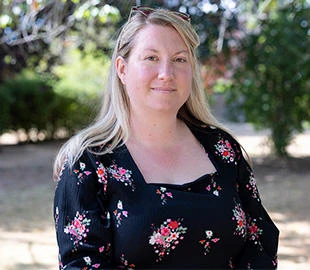
Hannah Harrison
Originally joining the University for a two-year foundation degree in Health and Social Care in 2021, she continued on to the Applied Health and Social Care top-up course to get the full degree, graduating in 2024. As a mature student, returning to education was daunting, but Hannah said she felt that the University understood her other commitments and provided flexibility.
“The lecturers were absolutely outstanding all the way through. What really held the most value to me was they were all experts in their own field, so they were able to bring with them the understanding of the reality of the sectors, but also overlay it with the evidence.”

Jade Heaysham
I chose the Applied Health and Social Care Top-up course following enjoying my time studying with Worcester for my Mental Health FdSc. I knew I was passionate about helping people, but didn’t yet know the specific branch of Health and Social Care that I wanted to work in, as it is such a diverse sector.
The course was supportive, friendly and most importantly interesting, with modules reflecting what is important in current practice. I am now working as a Wellbeing Coach, a branch of Social Prescribing, through a local Worcester based charity. This role involves helping people with low-level mental ill health via psycho education and evidence-based self-help techniques.
I have the lecturers on this course to thank for this, as they arranged guest speakers from different organisations, helping to inspire and raise awareness of roles I had never heard of- including the role I am now practicing as!
In the future I hope to return to Worcester to enrol on the Psychology MSc, in order to aid my practice and further enrich my understanding of mental health.

Kirsty Cutler
I dropped out of university when I was 19 and always wanted to go back but there was always something in the way. In the end I took the plunge when I was on maternity leave.
This degree offers you so much flexibility. The way the course is structured means modules run back to back on one day, which meant, for me, I was able to come to university and study at the same time. Even though you're not in uni five days a week, you've got so much support from the tutors that you really don't need to be.

Natasha Coram
The Top Up Degree provided me with a strong academic foundation and supported my learning in key areas such as mental health conditions, domestic abuse, and substance misuse. It enhanced my understanding of the complex factors that can impact an individual’s functioning and wellbeing. The course also strengthened my ability to apply theory to practice, develop clinical reasoning, and engage in evidence-based practice, which has helped prepare me for the demands of the OT qualification.

Jade Warmington
I chose this course because, at the time, I was working as a family support worker and wanted to finish my degree and study something that would be relevant and complement the job I was doing.
The way the course ran was flexible and allowed me work and study at the same time. I absolutely loved the course. The modules were interesting and interactive, and I enjoyed having in-depth conversations during our lectures. My tutors were so helpful and available whenever I needed guidance. I am now working for Birmingham and Solihull Women’s Aid as a Specialist Domestic Abuse Family Support Worker and studying the course definitely helped to inform my current practice. I am also studying for my Masters in Psychology.
Charlotte Bush
I chose the Applied Health and Social Care Top-up course as I thoroughly enjoyed completing the Health and Social Care FdSc. I wasn’t entirely sure which area in Health and Social Care I wanted to specify in, however, I knew my passion was to support and help others.
Choosing this course was perfect for studying contemporary issues within Health and Social Care. It is an interesting course with a variety of teaching, visitors and study time which was a good balance for my work, study and home life. The course was supportive and interesting throughout and perfect for my current role as a Wellbeing Coach for Worcester Primary Care Network. This role involves supporting people with low-level mental health conditions using a variety of self-help, healing strategies and techniques, many learnt from this course.
Completing this course has branched my career and future options to continue studying in many different avenues. In the future, I hope to return to studying to complete a Diploma in Counselling to become a qualified Counsellor. This strengthens my ability to support people in healing and overcoming trauma.
Stacey Probert
Stacey did the Applied Health and Social Care Top-up degree course having completed her Level 5 NVQ leadership and management in health and social care diploma while working in care. She runs her own domiciliary care company, but wanted to further her learning.
“For me the module on mental health was helpful, especially with my staff. I think you have to appreciate that working in care is a job with a lot of responsibility. Having an understanding of the mental health side of things is helping within the work environment as well.
Having the new knowledge of different units that I've done definitely helped me progress the staff more, understand the staff more and the service users, particularly around social prescribing. This part of the course helped massively. It really helped me understand the other ways that people might think about things or what they might find helpful.”
Course highlights



Teaching and assessment
Through a combination of independent study, engaging teaching, and personalised support from our academics, you’ll have the opportunity to reflect on your progress and develop a strong portfolio of skills, achievements, and experiences that will empower you to thrive and develop your career within health and social care.
Teaching and assessment contents
Teaching will be through a blend of online and on‑campus learning, with a combination of seminars, tutorials, and interactive activities. Most teaching takes place online, supported by scheduled on‑campus days throughout the year to strengthen study skills, build peer connections, and enhance your learning experience.
Your personal reflection will play a key role in supporting your progress, and deepening your understanding of how to critically analyse research and evidence. While work‑based learning isn’t required for the Top‑up Degree, volunteering or working in the sector is still encouraged to help you apply theory to practice.
Entry requirements
- A Foundation degree, DipHE, HND or equivalent qualification in health, care or welfare or related subject
- Supportive academic reference
We will also consider applicants from non-standard entry routes.
We encourage applications from candidates who can provide evidence of their ability to work at Level 6 and substantial experience of working within health, care or social welfare.
If your qualification is not listed, please contact our Admissions team for advice.
Please note that this course is not available to applicants who require a student visa.
Any questions?
If you have any questions about entry requirements, please call our Admissions Office on 01905 855111 or email admissions@worc.ac.uk.
Fees
Fees contents
UK and EU students
The standard fee for full-time home and EU undergraduate students on BA/BSc/LLB degrees and FdA/FdSc degrees in the academic year 2027/28 is £10,050 per year.
Tuition fees are reviewed annually and may increase each year for both new and continuing students.
For more details on course fees, please visit our course fees page.
International students
The standard tuition fee for full-time international students enrolling on BA/BSc/LLB degrees and FdA/FdSc degrees in the academic year 2027/28 is £17,700 per year.
Tuition fees are reviewed annually and may increase each year for both new and continuing students.
For more details on course fees, please visit our course fees page.
How to apply
How to apply contents
Applying through UCAS
UCAS is the central organisation through which applications are processed for full-time undergraduate courses in the UK.
Read our how to apply pages for more information on the application process, or if you’d like to apply for part-time study.
Contact
If you have any questions, please get in touch. We're here to help you every step of the way.

Admissions Office
admissions@worc.ac.uk01905 855111More to explore
Open Days
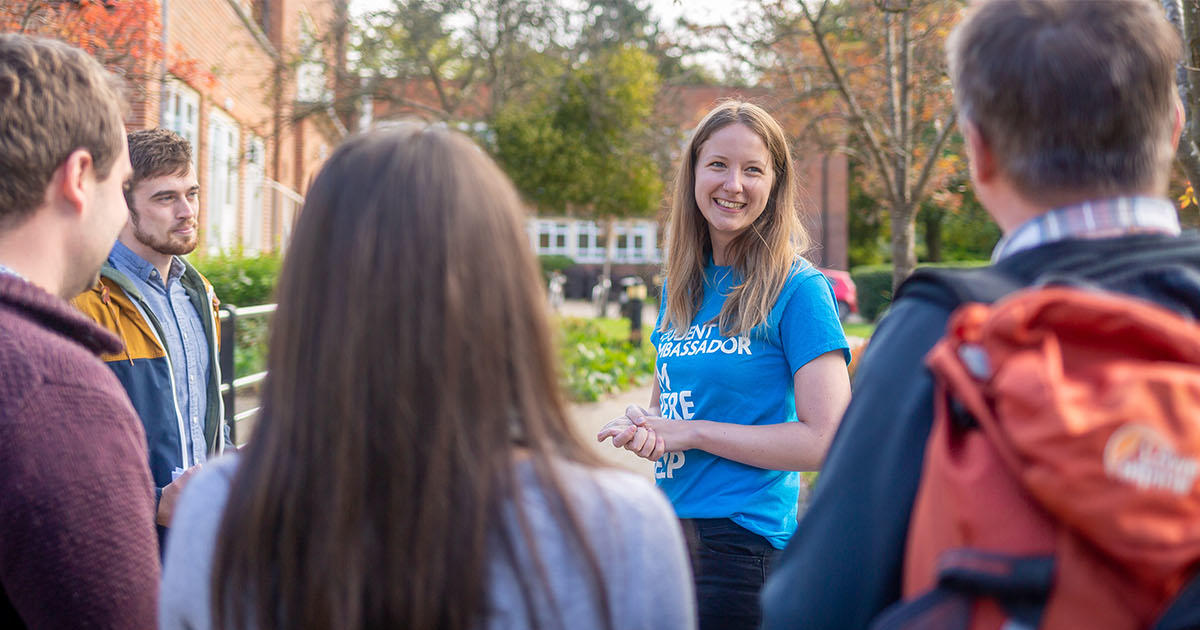
Visiting us is the best way to get a feel for student life at the University of Worcester.
The City of Worcester
Worcester is a welcoming university city with great transport links and plenty of student parking.

Accommodation
Benefit from our accommodation guarantee. We have rooms on campus to suit every budget including en-suite options.