Build practical skills through opportunities for hands-on projects and real-world placements. You might work in professional studios with industry-standard equipment, connect with our BBC partners and compete for the prestigious Natasha’s Voice Prize in Journalism.
of journalism students said teaching staff supported their learning well
our English courses are ranked in the Top 20 for graduate prospects
Overview
Whether your ambitions lie in writing and broadcasting, this degree is all about combining creativity with practical experience. You’ll explore how language shapes our world and identities while developing the skills to craft compelling stories and produce content for today’s media landscape.
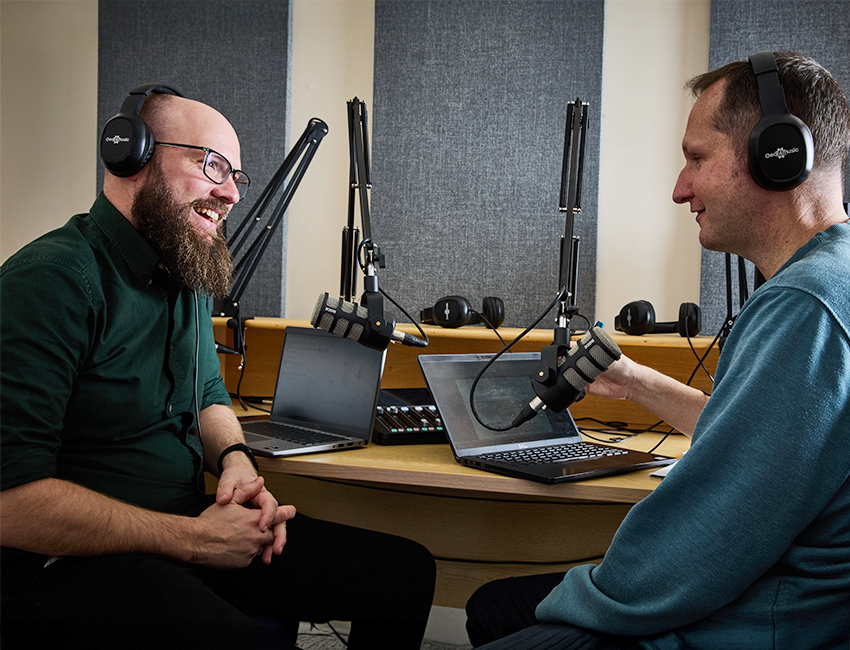
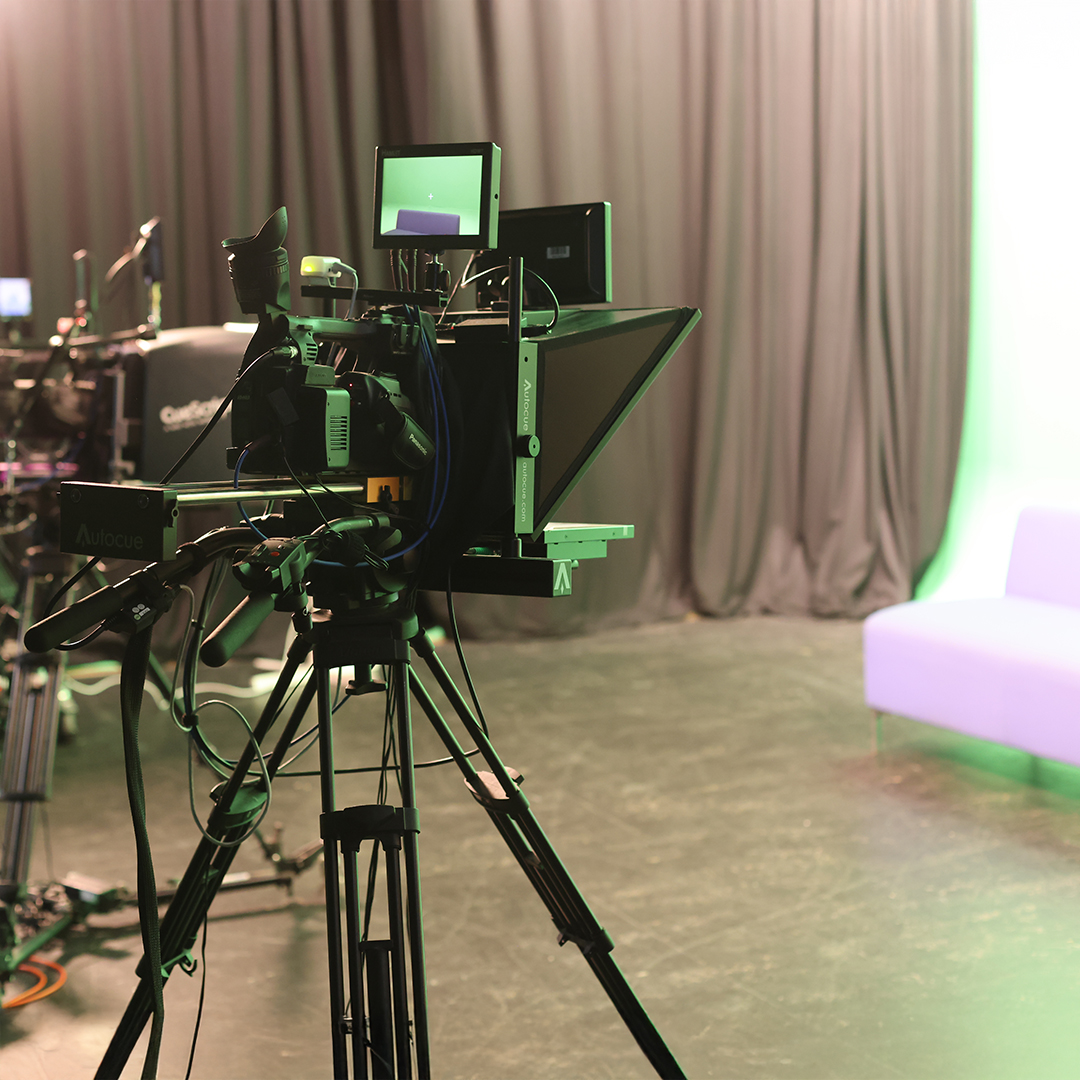
From your first week, you’ll start building your professional network and learning hands-on skills in our radio, podcast and TV studios, using industry-standard equipment. You’ll be taught by experienced professionals who’ve worked across news, magazines, broadcasting, PR and digital media. Through small group seminars, you’ll learn how to spot, write and pitch stories, as well as gain insight into media law, ethics and the role of journalism in society.
Alongside Journalism, you’ll dive into the study of English Language, exploring everything from phonology to semantics, and how language is shaped by social and cultural influences. You’ll learn practical methods for analysing language, from identifying patterns in data to interpreting meanings and ideas in detail. As your understanding grows, you’ll develop your own unique journalistic style.
You’ll also have opportunities to specialise in areas that matter to you, whether that’s sport, music, fashion, investigative journalism, or campaigning journalism on issues like the environment, gender and identity. Plus, you can learn T-Line shorthand and even earn the CELTA Award (subject to meeting criteria), qualifying you to teach English to speakers of other languages worldwide.
Our strong industry links mean you’ll benefit from placements with organisations such as the BBC through our Media Diversity Partnership, other broadcasters via BJTC accreditation, and local online and print media. There’s also the chance to win The Natasha’s Voice Prize for Original Broadcast Journalism if you choose to do a journalism dissertation, a prestigious award that makes you CV stand out in a competitive industry.
Work experience
As you progress through the course, you’ll have plenty of opportunities to apply what you’ve learned in a professional context and prepare for your future career.
In year two, you’ll have the option to explore career opportunities in your chosen field and undertake a period of professional practice. This includes creating a personal development plan, producing a CV and supporting documentation, and learning how to approach prospective employers. You’ll also benefit from our strong industry links, with placement opportunities at the BBC through the university’s BBC Media Diversity Partnership, access to other broadcasters via our BJTC accreditation, and connections with local online and print organisations.
You can also choose an optional module that combines workplace experience with your English Language studies. This involves working on a project you help to initiate, supported by university staff, the Students’ Union, Careers Service and community partners.
Then, in year three, you’ll have the chance to develop your professional skills further by completing a two-week journalism placement and refining your personal development plan to prepare for life after graduation. You’ll continue to benefit from our partnerships with the BBC, other broadcasters and local media organisations.
Graduate case study - Charlotte Broadbent
Course content
In your first year, you’ll study all mandatory modules to prepare you for the rest of the course. From Year Two onwards, you can tailor your degree with optional modules that reflect your interests and career goals.
We regularly review our courses to reflect the latest research and developments in the subject area, as well as feedback from students, employers and the wider sector. As a result, modules may change to ensure the course remains current and relevant.
Optional modules will run if enough students choose to study them. It is not guaranteed that all modules will be offered every year.
Careers
Our course is designed with your future in mind, equipping you with highly transferable skills such as writing, research, proofreading, critical analysis and public speaking. These abilities are valued across a wide range of industries.
Throughout your degree, you’ll benefit from career-focused opportunities that prepare you for success. Work-related projects and placements give you real-world experience and help you build a professional portfolio. In addition, you have the chance to earn the CELTA Award (subject to meeting specific criteria), qualifying you to teach English to speakers of other languages worldwide.
Our Careers and Employability Service offers tailored support to help you take confident steps toward your chosen career. From CV workshops and interview preparation to job search advice, you’ll have access to expert guidance throughout your studies.
An English Language and Journalism degree expands your career options by developing your ability to adapt tone, craft compelling narratives and understand language nuances. These skills can lead to roles in:
- Media and broadcasting
- Publishing
- Public relations
- Content creation
- Copywriting
- Communications
Opportunities to progress
You may wish to take your learning further and progress onto postgraduate study. Relevant postgraduate degrees at Worcester include:
Some former graduates have also chosen to complete a Law Conversion Course (commonly known as a PGDL or a GDL). This is a postgraduate qualification designed for non-law graduates looking to pursue a career in the legal field.
Course highlights


Teaching and assessment
Teaching is a mix of interactive seminars, lectures, and one-to-one tutorials. Our modules give you the chance to develop your skills as a journalist and a linguist through practical sessions and personal guidance.
Teaching and assessment contents
You are taught through a combination of:
- Lectures; seminars; demonstrations; workshops; work simulations (newsdays); tutorials, group and individual project work; supervised independent learning; open and resource-based learning; e-learning; production practice and work experience and placements.
- Teaching involves large and small group sessions, the latter especially for workshop activities related to the acquisition of production skills.
- Sessions are a mix of tutor-led, student-led and independent learning.
- You will investigate critically and analyse theoretical and conceptual issues central to journalism studies and be able to synthesis and evaluate material. Acquire skills to'originate and develop ideas for editorial content across a range of platforms. Investigate the development of journalism with regard to political, social, economic, legal, ethical and technological considerations.
In addition, meetings with personal academic tutors are scheduled on at least 4 occasions in the first year and three occasions in each of the other years of a course, including during an induction session at the start of each academic year.
You have an opportunity to undertake work placements in both your second and third years of the course, as part of mandatory modules on the course.
You use industry-standard equipment and software for all pathways and have access to state-of-the-art TV and radio studios throughout the course.
Entry requirements
UCAS tariff points required: 104
| Qualification | Grade |
|---|---|
| A-level | BCC |
| BTEC National Extended Diploma | DMM |
| T-level | M |
We do accept Access to HE Diplomas and other qualifications which may not exactly match the combinations above. Work out your estimated points with the UCAS tariff calculator.
Any questions?
If you have any questions about entry requirements, please call our Admissions Office on 01905 855111 or email admissions@worc.ac.uk.
Fees
Fees contents
UK and EU students
The standard fee for full-time home and EU undergraduate students on BA/BSc/LLB degrees and FdA/FdSc degrees in the academic year 2027/28 is £10,050 per year.
Tuition fees are reviewed annually and may increase each year for both new and continuing students.
For more details on course fees, please visit our course fees page.
International students
The standard tuition fee for full-time international students enrolling on BA/BSc/LLB degrees and FdA/FdSc degrees in the academic year 2027/28 is £17,700 per year.
Tuition fees are reviewed annually and may increase each year for both new and continuing students.
For more details on course fees, please visit our course fees page.
How to apply
How to apply contents
Applying through UCAS
UCAS is the central organisation through which applications are processed for full-time undergraduate courses in the UK.
Read our how to apply pages for more information on the application process, or if you’d like to apply for part-time study.
English Language and Journalism BA (Hons) - PQ53
Contact
If you have any questions, please get in touch. We're here to help you every step of the way.
Admissions Office
admissions@worc.ac.uk01905 855111More to explore
Open Days
Visiting us is the best way to get a feel for student life at the University of Worcester.
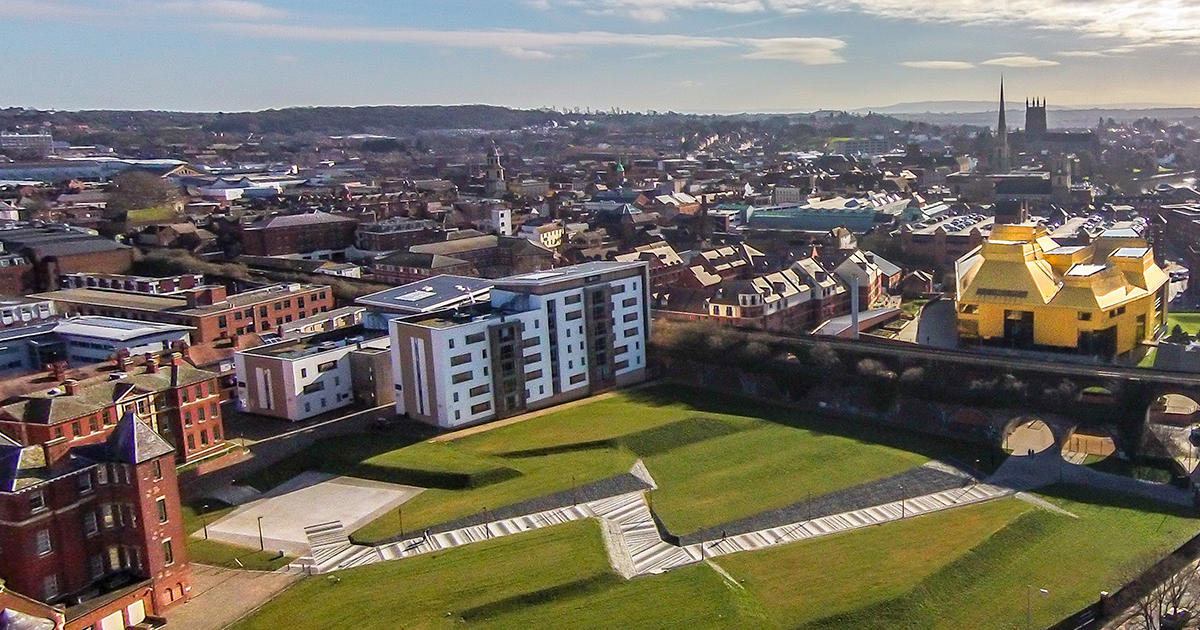
The City of Worcester
Worcester is a welcoming university city with great transport links and plenty of student parking.
Accommodation
Benefit from our accommodation guarantee. We have rooms on campus to suit every budget including en-suite options.