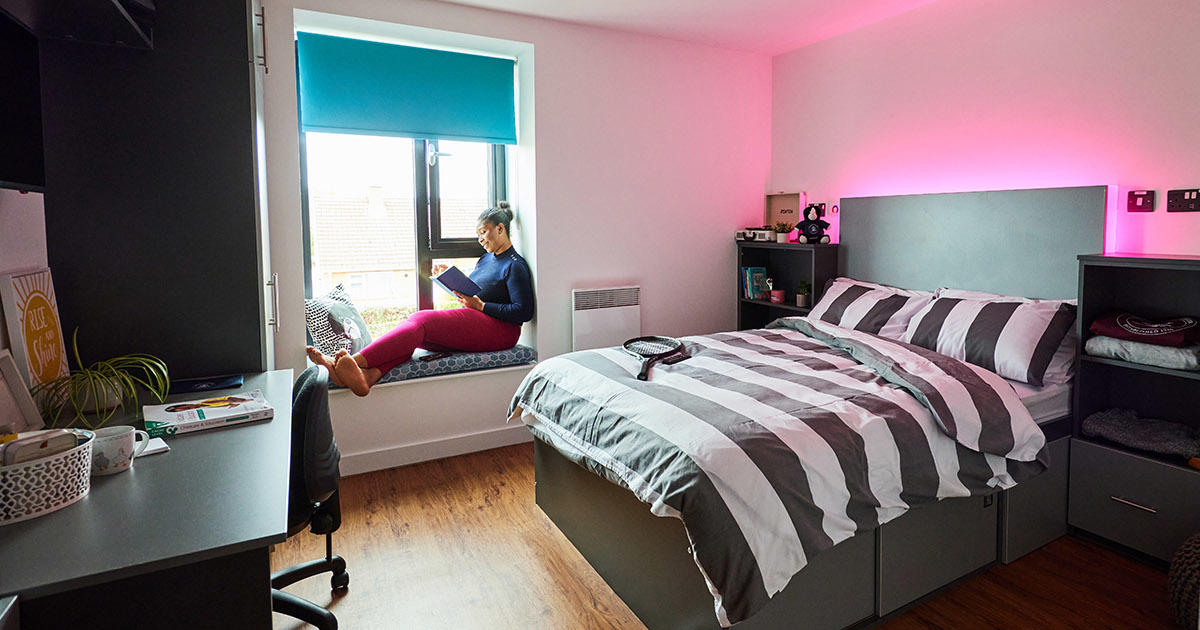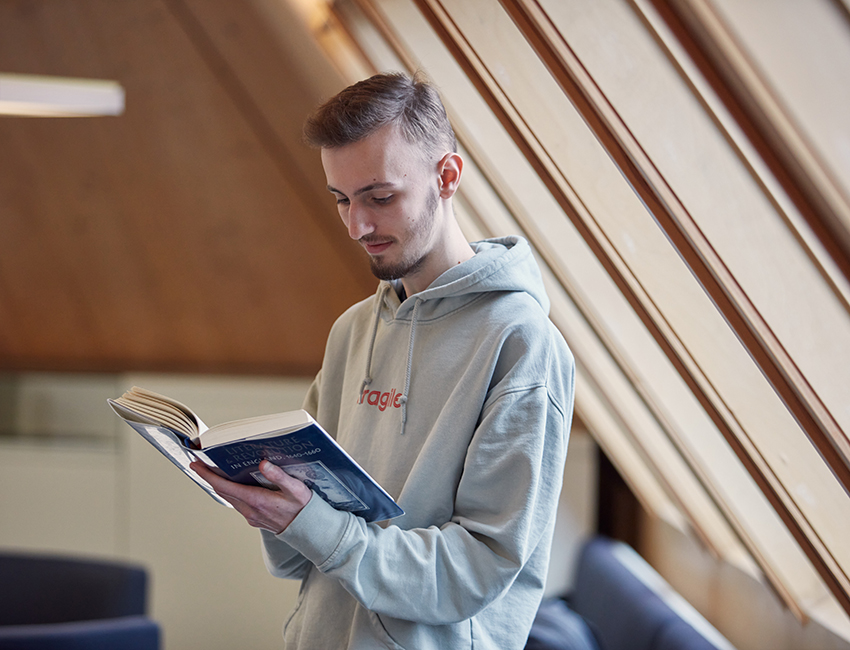
At Worcester, explore literature from the 16th century to today while studying how teaching shapes learning. Link stories with education theory to challenge inequality and inspire change. Gain experience through local literature festivals and visit different educational settings, immersing yourself in a vibrant university and city community
of students are in work and/or further study 15 months after graduating
of student felt free to express their opinions and beliefs
Clearing 2026
Apply now to start this September. Check course availability, find out how to secure your place and take advantage of our accommodation guarantee on our Clearing webpages or by calling 01905 544433.
Overview
From your very first year, you’ll explore the big ideas behind education and how it’s understood through history, sociology, and psychology. At the same time, English Literature will open up the cultural and historical contexts behind influential texts, helping you develop critical thinking skills that link both subjects. These skills will be essential as you engage with debates about education and begin shaping your own views on how teaching and learning can evolve to meet the needs of today and the future.
You’ll examine how different approaches to learning affect real people and consider the social and political forces that shape both teaching methods and the content taught. Literature adds another layer, revealing how these themes are portrayed in different genres and what messages authors aim to share. For example, you’ll look at how education responds to equality and diversity, alongside how writers use identity, such as gender, sexuality, and ethnicity, to offer unique perspectives on global and national issues like war and civil rights.
Learning takes place in small, interactive groups across both subjects, giving you the chance to join lively discussions and hear a range of viewpoints. This collaborative environment will help you develop your own voice, which you’ll use to choose a research focus for your final-year dissertation and become an active researcher in a topic that inspires you.
Beyond the classroom, you’ll gain real-world insight through visiting care farms, pupil referral units, education for learners with special education needs and prison education. You’ll also explore how literature adapts to film through dedicated screenings, adding another dimension to your studies.
Work experience
As part of the English Literature course, in your second year you could complete an optional work experience placement module, enabling you to complete a short voluntary placement with a local organisation. Past work experience locations have included schools, local arts and heritage organisations, and The Hive Library.
You will also be supported in taking up voluntary work opportunities outside of your course. This could involve working with our museums, theatres, The Hive library or showcasing your work with Severn Arts and Worcestershire Litfest and Fringe.
By engaging with Worcester's local organisations and arts festivals, you’ll gain work experience, build a portfolio of creative works and begin developing your network of professionals, who can continue to support you and offer guidance after graduating.
As part of Education Studies, you can take work placement modules in Years 2 and 3. You'll need to arrange a placement in an approved educational setting, either through volunteering or work. During your placement, you'll observe teaching and learning in practice, gaining experience of working with learners of different ages, abilities, and backgrounds. This is a great opportunity to develop your understanding of education while building valuable skills and experience for your future career.
Course content
Our modules are designed to introduce you to the foundations of current education practice and different literary themes and eras, so you can build up the knowledge and skills related to your interests ready for your dissertation in your final year.
We regularly review our courses to reflect the latest research and developments in the subject area, as well as feedback from students, employers and the wider sector. As a result, modules may change to ensure the course remains current and relevant.
Optional modules will run if enough students choose to study them. It is not guaranteed that all modules will be offered every year.
Careers
By your third year you’ll have improved your communication, critical thinking, leadership and organisation skills in addition to having the specialised knowledge in both literature and Education which will support you in progressing towards a variety of careers in fields such as:
- Education
- Writing
- Publishing
- Media and communications
- Marketing
- Public relations
With an undergraduate degree you’d be able to further build on your skills or incorporate another subject of interest into your skillset.
Further study
Worcester offers a range of postgraduate and research-based courses.
You could progress onto any of our Humanities courses, which includes English related courses or our Education and Teaching Training courses.
Course highlights

Teaching and assessment
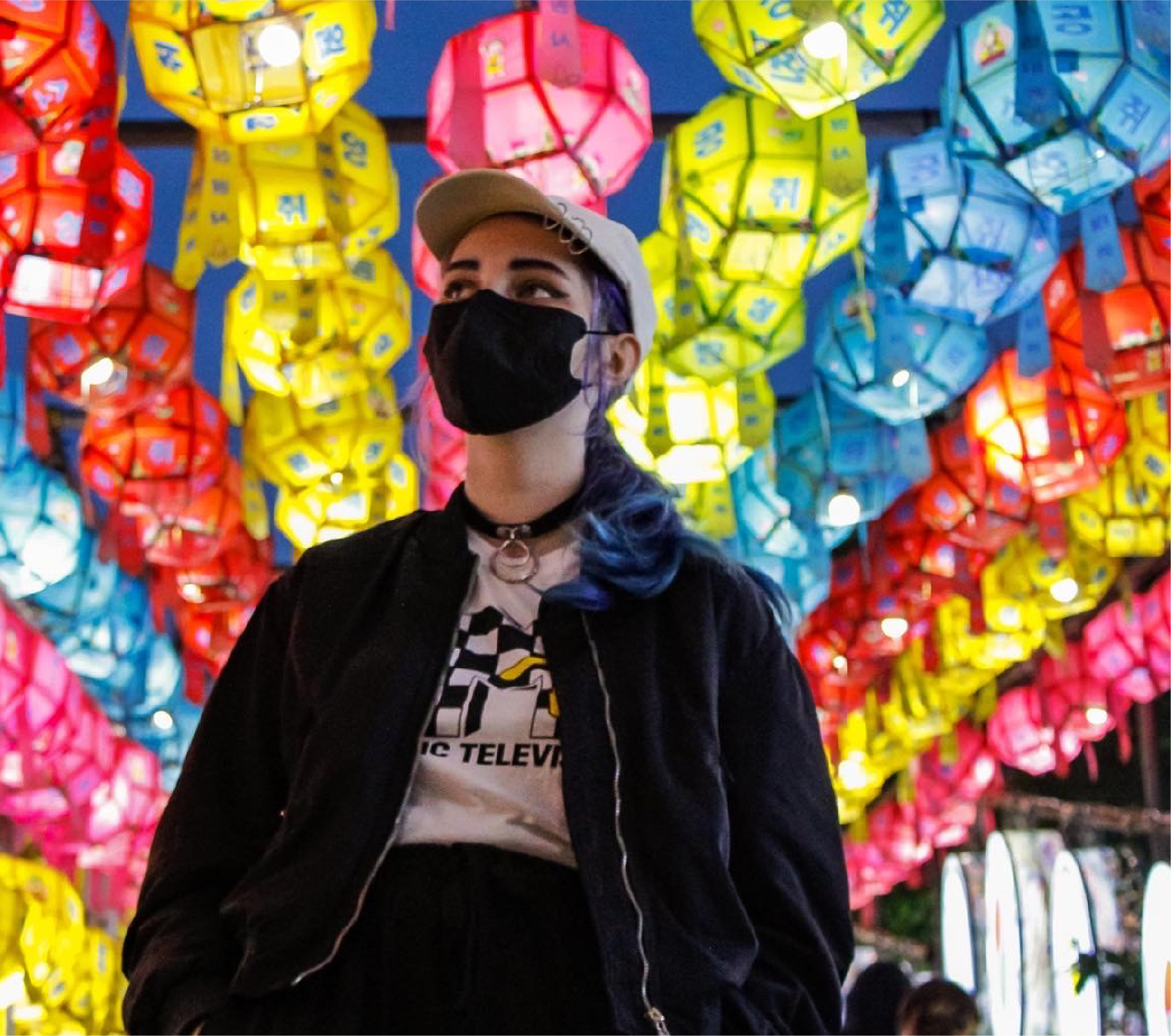
You’ll be taught through a combination of lectures, seminars and interactive workshops, to give you opportunities to learn, discuss and apply what you’ve learnt. Instead of exams your progress will be assessed with both formal and informal assessments to give you opportunities to demonstrate what you’ve learnt and gain regular feedback throughout each module. These assessments will typically come in the form of essays, research reports, blog entries and presentations.
Teaching and assessment contents
You will be taught through a combination of workshops, lectures, seminars, research trips to cultural locations in the region, and film screenings. Lectures will equip you with core information and foundational knowledge, which you can then explore further through discussion and debate in seminars.
You’ll be encouraged to take an active role in your learning by engaging in group discussions, sharing your thoughts and opinions, and reflecting on how new insights connect with your prior knowledge.
All modules are supported by the use of the virtual learning environment and other learning technologies.
You will also have the opportunity to gain employability skills through work-based learning. The primary focus of this provision is the year 2 Work Project module where students gain valuable experience of work.
Meet our Education Studies and English Literature academics
Dr Lucy Arnold
Dr Lucy Arnold is a specialist in Contemporary literature, with particular research interests in contemporary gothic, narratives of haunting, contemporary women’s writing and psychoanalytic criticism. Her teaching experience spans a wide range of periods and genres but focusses on twentieth and twenty-first century literature.
Her published work to date has concerned the writing of Booker Prize winning novelist Hilary Mantel. Her debut monograph, Reading Hilary Mantel: Haunted Decades (Bloomsbury, 2019) was followed in 2026 by Hilary Mantel ('Writers and their Work', Liverpool University Press). Her third book, Little Strangers: The Spectral Child in Contemporary Literature, is forthcoming with Bloomsbury in 2027.

Professor Nicoleta Cinpoes
Nicoleta Cinpoes joined the University of Worcester in 2007. She teaches Renaissance Literature, is International Exchanges Liaison for the Institute of Arts and Humanities and co-director of Worcester's Early Modern Research Group.
She has edited Doing Kyd: A Collection of Critical Essays on the Spanish Tragedy for Manchester University Press (2016) and is currently collaborating on a new Romanian translation of Shakespeare's complete works, writing introductions to Hamlet (2010), Titus Andronicus, Measure for Measure, The Merchant of Venice and The Comedy of Errors.
Dr Rebecca Mace
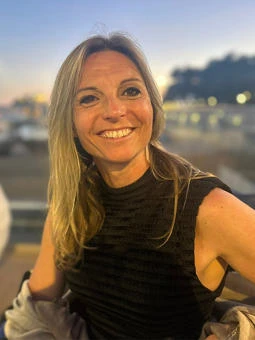
Rebecca is an experienced educator with nearly two decades of teaching across a diverse range of settings, including state, independent, day, boarding, single-sex, and co-educational schools. Rebecca’s research interests are strongly rooted in philosophy, education, and feminism and she has a particular interest in technology, particularly the application of AI in education. For her PhD, Rebecca explored how social media-dominated culture impacts the concept of self.

Simon Taylor
Simon joined the School of Education in January 2016 having worked in the arts and cultural sector for many years. He specialises in collaborative research, building partnerships, commissioning, strategic planning, interdisciplinary working and professional development supporting artists, teachers and senior managers.
Simon is a Fellow of the Higher Education Academy (HEA) and a Fellow of the Royal Society for the Encouragement of the Arts, Manufactures and Commerce (FRSA).
Dr Lucy Arnold
Dr Lucy Arnold is a specialist in Contemporary literature, with particular research interests in contemporary gothic, narratives of haunting, contemporary women’s writing and psychoanalytic criticism. Her teaching experience spans a wide range of periods and genres but focusses on twentieth and twenty-first century literature.
Her published work to date has concerned the writing of Booker Prize winning novelist Hilary Mantel. Her debut monograph, Reading Hilary Mantel: Haunted Decades (Bloomsbury, 2019) was followed in 2026 by Hilary Mantel ('Writers and their Work', Liverpool University Press). Her third book, Little Strangers: The Spectral Child in Contemporary Literature, is forthcoming with Bloomsbury in 2027.
Professor Nicoleta Cinpoes
Nicoleta Cinpoes joined the University of Worcester in 2007. She teaches Renaissance Literature, is International Exchanges Liaison for the Institute of Arts and Humanities and co-director of Worcester's Early Modern Research Group.
She has edited Doing Kyd: A Collection of Critical Essays on the Spanish Tragedy for Manchester University Press (2016) and is currently collaborating on a new Romanian translation of Shakespeare's complete works, writing introductions to Hamlet (2010), Titus Andronicus, Measure for Measure, The Merchant of Venice and The Comedy of Errors.
Entry requirements
UCAS tariff points required: 104
| Qualification | Grade |
|---|---|
| A-level | BCC |
| BTEC National Extended Diploma | DMM |
| T-level | Merit |
We do accept Access to HE Diplomas and other qualifications which may not exactly match the combinations above. Work out your estimated points with the UCAS tariff calculator.
Any questions?
If you have any questions about entry requirements, please call our Admissions Office on 01905 855111 or email admissions@worc.ac.uk.
Fees
Fees contents
UK and EU students
In 2026/27 the standard fee for full-time home and EU undergraduate students on BA/BSc/LLB degrees and FdA/FdSc degrees is £9,790 per year.
Tuition fees are reviewed annually and may increase each year for both new and continuing students.
For more details on course fees, please visit our course fees page.
International students
In 2026/27 the standard tuition fee for full-time international students enrolling on BA/BSc/LLB degrees and FdA/FdSc degrees is £17,200 per year.
Tuition fees are reviewed annually and may increase each year for both new and continuing students.
For more details on course fees, please visit our course fees page.
How to apply
How to apply contents
Applying through UCAS
UCAS is the central organisation through which applications are processed for full-time undergraduate courses in the UK.
Read our how to apply pages for more information on the application process, or if you’d like to apply for part-time study.
Contact
If you have any questions, please get in touch. We're here to help you every step of the way.
Dr Sharon Young
Senior Lecturer in English Literature, Course Leader for MA English and MA Cultural Studies and Admissions Tutor
s.young@worc.ac.ukAdmissions Office
admissions@worc.ac.uk01905 855111More to explore
Open Days
Visiting us is the best way to get a feel for student life at the University of Worcester.
The City of Worcester
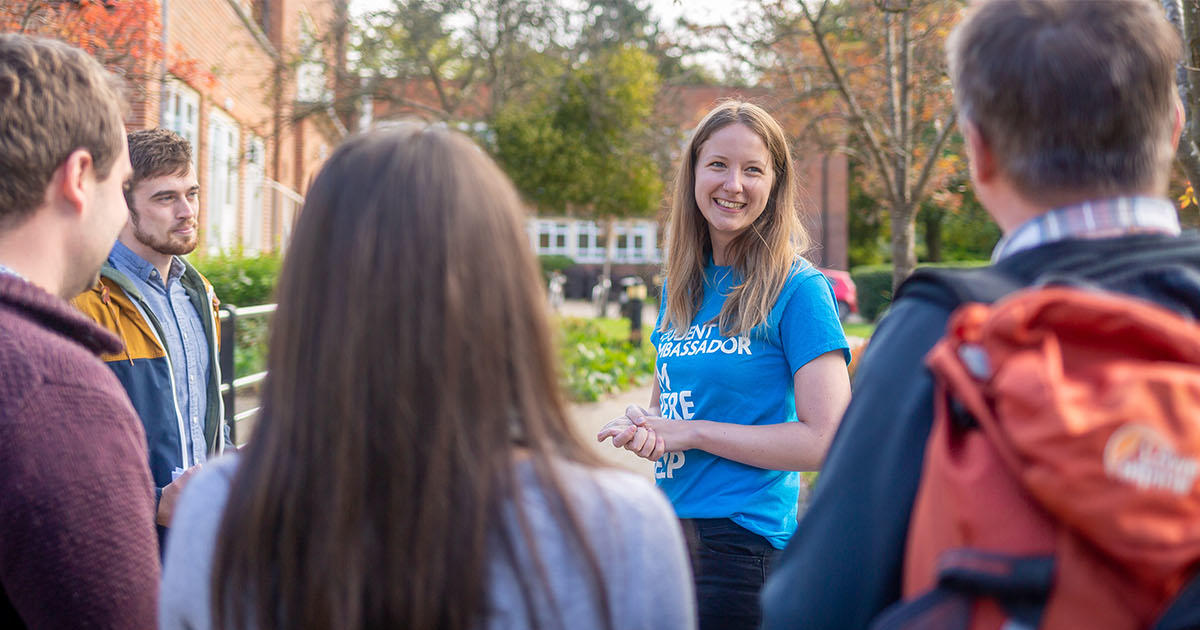
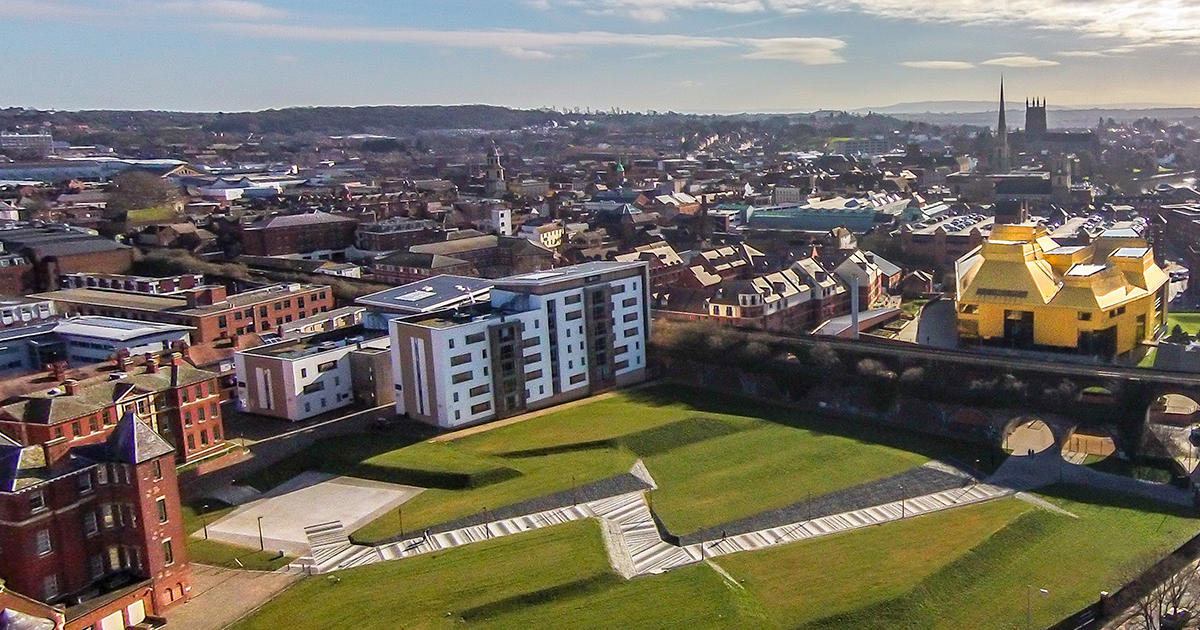
Worcester is a welcoming university city with great transport links and plenty of student parking.
Accommodation
Benefit from our accommodation guarantee. We have rooms on campus to suit every budget including en-suite options.