Our degree combines classroom learning at Birmingham Metropolitan College (BMET) with hands‑on experience during your placement. Over the duration of the course, you’ll build the practical manufacturing skills needed to produce a variety of dental appliances.
Clearing 2026
Apply now to start this September. Check course availability, find out how to secure your place and take advantage of our accommodation guarantee on our Clearing webpages or by calling 01905 544433.
Overview
Shaped in close collaboration with employers and aligned with National Occupational Standards, this degree reflects the real needs of the profession. You’ll explore the fast‑growing world of digital dentistry, including CAD/CAM technologies that are transforming how dental devices are designed and produced.
You’ll gain experience using digital technology in purpose-built dental laboratories. You’ll design crowns, bridges and orthodontic appliances on‑screen before manufacturing them using milling machines and 3D printers. This means you'll graduate confident in both traditional laboratory techniques and the latest digital processes.
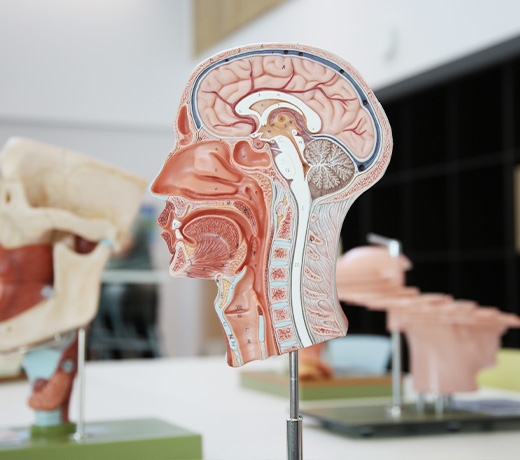
Alongside practical training, you’ll deepen your scientific understanding of dental technology. You’ll explore why different materials are selected for specific devices and build on your knowledge of the head, mouth, teeth and supporting tissues. As you develop your understanding of oral anatomy, you can apply it to the design, fit and function of every appliance you create.
Teaching takes place at Matthew Boulton College in Birmingham, where you’ll learn in a friendly, skills‑focused environment designed to help you grow.
Workplace learning
Throughout the course, you’ll be expected to engage in work‑based learning within a Dental Laboratory environment. If you’re not currently working in a suitable setting, you’ll need to secure a placement that allows you to gain hands‑on experience for the equivalent of one day per week. This experience will build practical skills, help you maintain a professional understanding and bring authentic insight into your portfolio work, reflections and discussions.
Throughout your placement, you’ll be supported by a Work Placement Mentor. Your mentor will work alongside you to build your practical skills, offering guidance, reassurance and professional insight as you create each appliance. They’ll help you understand industry expectations and develop the confidence to produce work ready for real customers.
Course content
Modules are mandatory in this course, as it has been carefully designed to progress your skills and experience year on year, so you can feel confident in the industry.
We regularly review our courses to reflect the latest research and developments in the subject area, as well as feedback from students, employers and the wider sector. As a result, modules may change to ensure the course remains current and relevant.
Careers
This Dental Technology Foundation Degree gives you the technical skills and professional insight needed to work confidently across the dental technology sector, from commercial laboratories to clinical environments.
Throughout the course, you’ll develop the core abilities employers value most: precision, creativity and problem‑solving, as you develop your professional judgement. These are embedded in every module through practical projects, real‑world casework and collaborative learning, so you’ll graduate ready to contribute effectively within fast‑paced laboratory and clinical settings.
With this degree, you could progress into careers such as:
- Dental laboratory technician
- Clinical dental technologist (with further study)
- Dental laboratory manager
- Dental industry roles in sales, training or research
Opportunities to progress
You'll also be able to apply for direct entry to a third year BSc or BA (Hons) Top-up degree at the University of Worcester, after successfully completing this course.
Course highlights

Teaching and assessment
During your placement in a dental laboratory, you’ll gain hands-on experience in manufacturing a range of dental appliances, applying the specialist skills essential to professional dental technology. You’ll also train in our purpose-built laboratories, where you’ll develop the core practical techniques used across dental technology services.
The academic elements of the course are delivered at Birmingham Metropolitan College, one of our dedicated partner institutions.
We regularly review and update our courses to reflect the latest research, emerging technologies and sector developments, as well as feedback from students and employers. As a result, modules may be revised to ensure the course stays current, relevant and aligned with industry needs.
Teaching and assessment contents
The programme will be taught through lectures, seminars, e-learning, workshops and work-based learning (WBL). It also includes practical projects and portfolio work by students. It is important that the programme provides a foundation of skills; knowledge and understanding that students can carry on through to other programmes. Opportunities for learning across the programme will be provided through in-class sessions supported by Blackboard online resources, exercises and tutorials. The resources provided through classroom delivery will form the basis for meeting the learning outcomes supported by further reading.
Essential resources will be available through Blackboard, as will the formative assessments, in the form of quizzes and short answer questions. Links to videos and other learning resources will also be available through Blackboard.
A number of custom-made components or devices will be used to develop an understanding of the laboratory manufacturing processes. The development of skills in manufacture and application will be based initially around simple devices, fixed restorations and models and orthodontic appliances thus enabling the development of a range of skills related to dental technology.
Students will be required to complete a total of 400 hours of work-based learning across the programme. This may be achieved through a minimum of one work placement for the duration of the programme. It is the student's responsibility to find an appropriate work placement at a Dental Laboratory in the public or private sector. Students are allocated a workplace mentor and a work placement officer. It is the work placement officer's responsibility to assess the work placement logbook formally and the workplace mentor will confirm the suitability of each appliance for presentation to the customer.
Lectures and tutorials will be used to underpin the practical components with the relevant theory, leading to greater comprehension of the skills being used. Transferable skills will be developed through the modules and embedded into the delivery for the work based modules. The work placements will be supported by work place mentors and college assessors.
Learning in the work-based environment is complemented by practical and technical skill development in the college laboratories where students are supported to achieve the required level of competence from basic to advanced skills, requiring development of professional judgement.
Entry requirements
UCAS tariff points required: 32
4 GCSEs (Grade C/4 or above) including English and Mathematics
All students will be required to sit an English diagnostic assessment equivalent to Level 2. This is to establish if students require support and is used as supportive tool only.
Any questions?
If you have any questions about entry requirements, please call our Admissions Office on 01905 855111 or email admissions@worc.ac.uk.
Fees
Fees contents
UK and EU students
In 2026/27 the standard fee for full-time home and EU undergraduate students on BA/BSc/LLB degrees and FdA/FdSc degrees is £9,790 per year.
Tuition fees are reviewed annually and may increase each year for both new and continuing students.
For more details on course fees, please visit our course fees page.
International students
In 2026/27 the standard tuition fee for full-time international students enrolling on BA/BSc/LLB degrees and FdA/FdSc degrees is £17,200 per year.
Tuition fees are reviewed annually and may increase each year for both new and continuing students.
For more details on course fees, please visit our course fees page.
How to apply
How to apply contents
Applying through UCAS
UCAS is the central organisation through which applications are processed for full-time undergraduate courses in the UK.
Read our how to apply pages for more information on the application process, or if you’d like to apply for part-time study.
Dental Technology FdSc - B840
Contact
If you have any questions, please get in touch. We're here to help you every step of the way.
BMet Admissions
heenquiries@bmet.ac.ukAdmissions Office
admissions@worc.ac.uk01905 855111More to explore
Get in touch
If you have any questions for BMET, or if you'd like to visit, they're here to help.

Open Days
Visiting is the best way to get a feel for student life at BMET.

About the University
Find out more about the University of Worcester.